Hodell, D.A., Abrantes, F., Alvarez Zarikian, C.A., and the Expedition 397 Scientists
Proceedings of the International Ocean Discovery Program Volume 397
publications.iodp.org
https://doi.org/10.14379/iodp.proc.397.204.2026
Data report: composite section and chronology of IODP Sites 339-U1385 and 397-U1385 based on postcruise XRF analysis1
D.A. Hodell,2 S.J. Crowhurst,3 M.J. Mleneck-Vautravers,3 J.E. Rolfe,3 M. Du,3 T.D. Herbert,2 H.-H.M. Huang,2 F. Abrantes,2 C.A. Alvarez Zarikian,2 and the Expedition 397 Scientists2
1 Hodell, D.A., Crowhurst, S.J., Mleneck-Vautravers, M.J., Rolfe, J.E., Du, M., Herbert, T.D., Huang, H.-H.M., Abrantes, F., Alvarez Zarikian, C.A., and the Expedition 397 Scientists, 2026. Data report: composite section and chronology of IODP Sites 339-U1385 and 397-U1385 based on postcruise XRF analysis. In Hodell, D.A., Abrantes, F., Alvarez Zarikian, C.A., and the Expedition 397 Scientists, Iberian Margin Paleoclimate. Proceedings of the International Ocean Discovery Program, 397: College Station, TX (International Ocean Discovery Program). https://doi.org/10.14379/iodp.proc.397.204.2026
2 Expedition 397 Scientists' affiliations. Correspondence author: [email protected]
3 Godwin Laboratory for Palaeoclimate Research, Department of Earth Sciences, University of Cambridge, United Kingdom.
Abstract
Following International Ocean Discovery Program (IODP) Expedition 397, split archive halves from Site 397-U1385 were analyzed at 1 cm resolution using an Avaatech X-ray fluorescence (XRF) core scanner at the University of Cambridge (United Kingdom). The resulting Ca/Ti profiles were used to revise the composite depth scales of Integrated Ocean Drilling Program Sites 339-U1385 and 397-U1385.
Expedition 339 recovered a nearly continuous sediment sequence to 151.5 meters below seafloor (mbsf) at Site U1385, except for a gap spanning Marine Isotope Stage (MIS) 11/Termination V at 53.06 mbsf. This interval was successfully retrieved during Expedition 397, completing the 1.45 My section. The existing depth scale for Site 339-U1385 was revised to integrate this missing sequence. Using dynamic programming, the Ca/Ti signal from Site 397-U1385 was stretched and compressed to align with the revised depth scale of Site 339-U1385. This alignment enables direct transfer of age models and isotopic records between the two.
Below 1.45 Ma (148.83 m core depth below seafloor, Method A [CSF-A], or 176.64 m core composite depth below seafloor [CCSF]), the chronology at Site 397-U1385 is established through benthic oxygen isotope stratigraphy and orbital tuning. The isotope record aligns with Site 339-U1385 for MISs 41–47 and extends to MIS 61, where a hiatus (~1.72–1.87 Ma) removed MISs 62–70. Below the hiatus, pronounced precession-driven variations in Ca/Ti serve as the basis for astronomical tuning, extending the chronology to 5.3 Ma. The Site 397-U1385 record provides a near-continuous record of changes in sediment composition at millennial resolution to the base of the Pliocene.
1. Introduction
International Ocean Discovery Program (IODP) Site U1385 (37°34.285′N, 10°7.562′W; 2578 m below sea level), referred to as "the Shackleton site," has become a benchmark record for millennial climate variability (MCV) for the last 1.45 My (Figure F1) (Hodell et al., 2023). The site was first drilled in November 2011 during Integrated Ocean Drilling Program Expedition 339 when cores from Holes U1385A–U1385E were recovered (Expedition 339 Scientists, 2013; Hodell et al., 2013b), reaching a maximum depth of 151.5 meters below seafloor (mbsf) (Figure F2). In November 2022, the site was reoccupied during IODP Expedition 397 when Holes U1385F–U1385J were drilled, extending the sedimentary section to 400 mbsf (Hodell et al., 2024b). Most recently, IODP Expedition 401 returned to the site and deepened it to 552.5 mbsf (Flecker et al., 2024). Reoccupations of Site U1385 are designated by prefixing the site name by its expedition numbers: 339-U1385, 397-U1385, and 401-U1385.
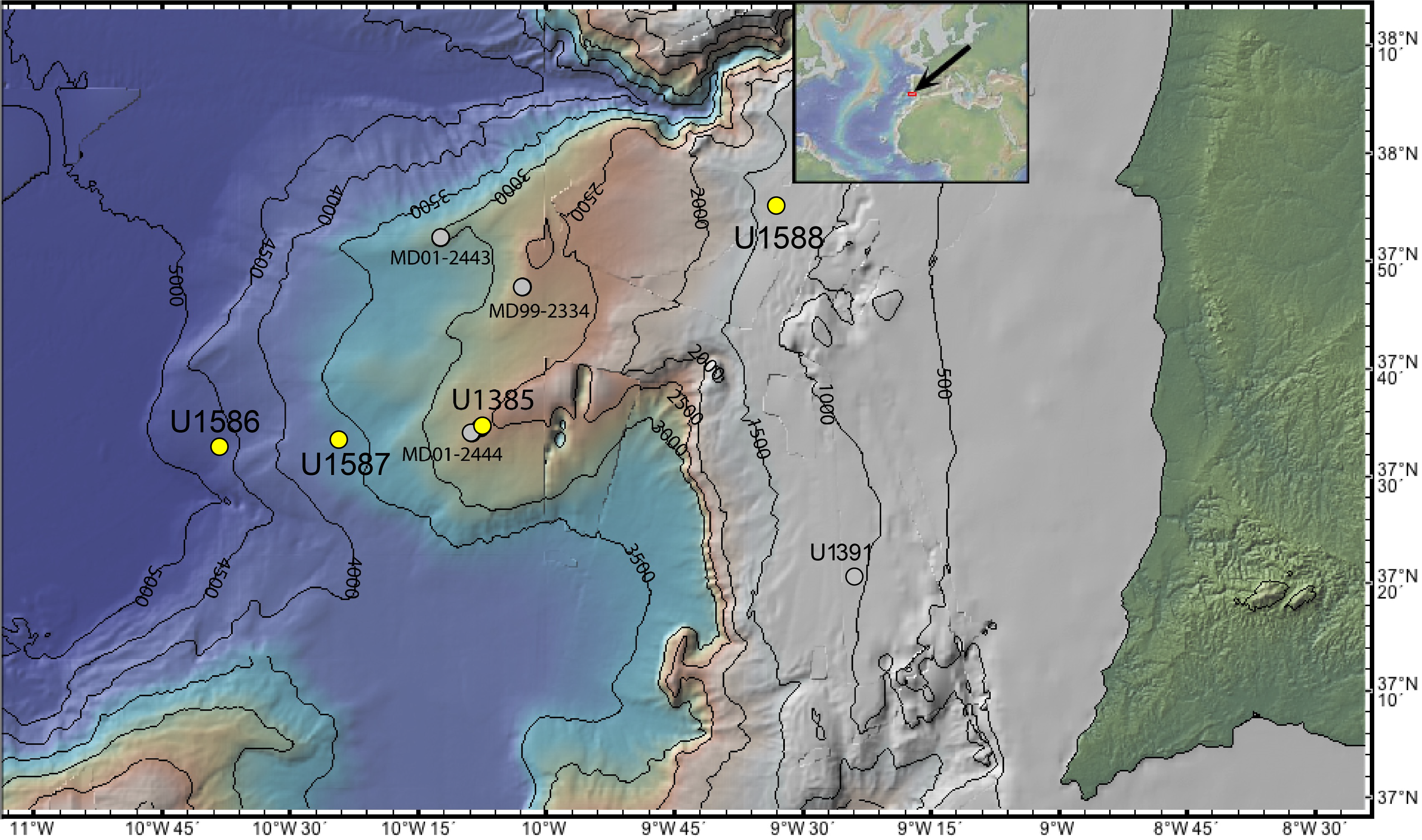
Figure F1. Location, Expedition 397 sites.
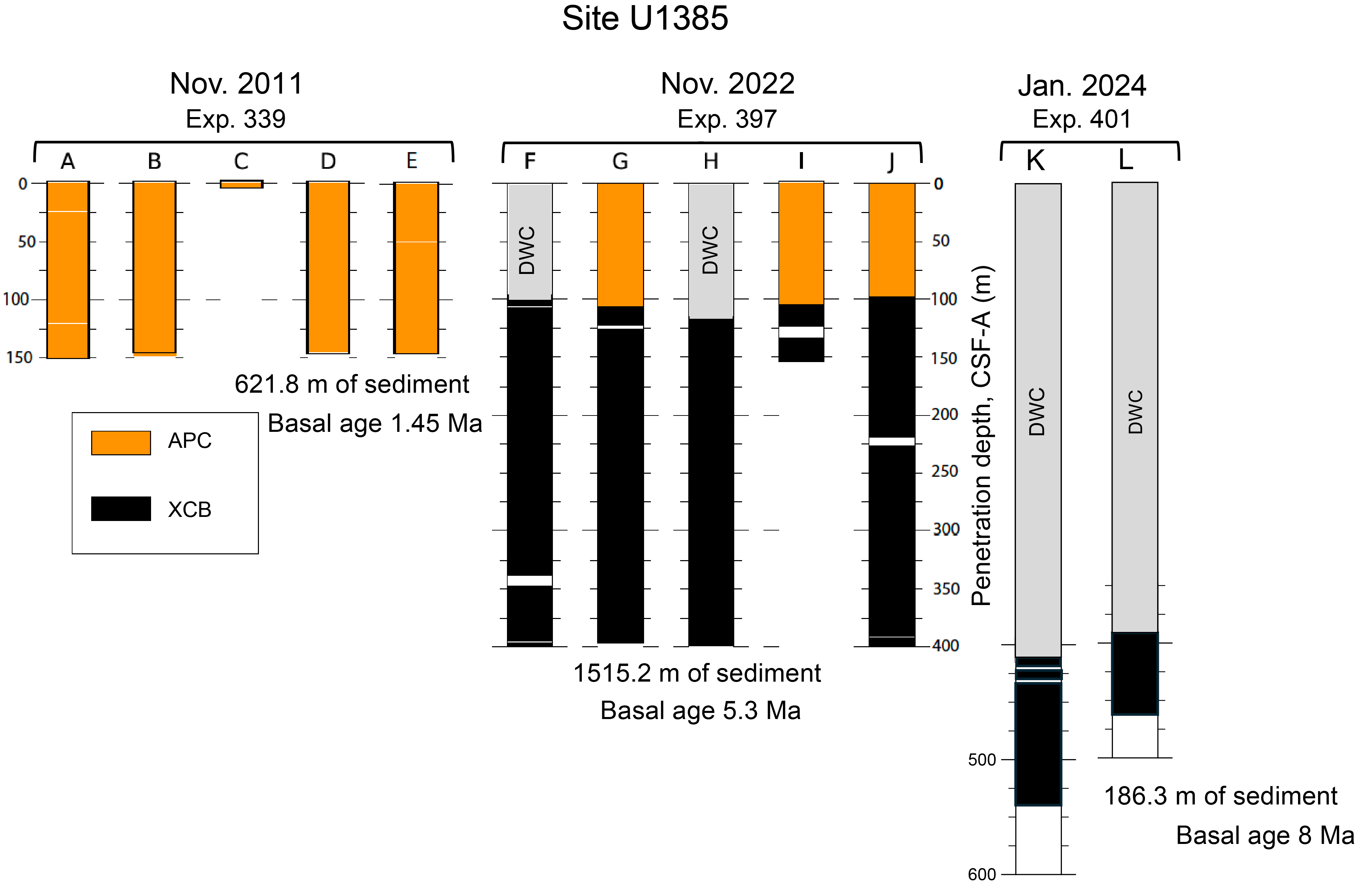
Figure F2. Core recovery.
Here, we report the X-ray fluorescence (XRF) data collected postcruise for Site 397-U1385, which is used to revise the shipboard composite depth scale and integrate the stratigraphy with Site 339-U1385. Integration of Site 401-U1385 by Expedition 401 scientists will soon follow (Flecker et al., 2024).
A composite section for Site 339-U1385 was originally constructed by correlating Ca/Ti ratios across Holes U1385A–U1385E (Hodell et al., 2015). This record extends to Marine Isotope Stage (MIS) 47, with a basal age of ~1.45 Ma based on correlation to the global oxygen isotope stack (Lisiecki and Raymo, 2005; Ahn et al., 2017), referred to hereafter as LR04. The sequence is nearly continuous, except for a short (~30,000 y) hiatus spanning late MIS 12 and early MIS 11. It was hoped that Expedition 397 would recover this missing interval by targeting a nearby location.
The primary drilling objectives of Site 397-U1385 were to (1) recover the MIS 11/Termination V interval and (2) extend the sedimentary section below the base of Site 339-U1385 to the base of the Pliocene. Both objectives were successfully achieved (Hodell et al., 2024b). Because of heavy sampling of the working halves of cores from Expedition 339 Holes U1385A–U1385E, the upper ~150 m were redrilled in Holes U1385G, U1385I, and U1385J during Expedition 397 (Figure F2), providing additional core material for sampling and future research.
The stratigraphy of Site 339-U1385 is well established, with several age models available based on orbital tuning, oxygen isotopes, and correlation to ice cores (Hodell et al., 2015, 2023). Integration of Sites 339-U1385 and 397-U1385 into a unified depth scale will permit transfer of these established chronologies and isotope stratigraphy from Site 339-U1385 to the new cores recovered at Site 397-U1385.
The objectives of this data report are to (1) present the high-resolution XRF core scanning data from Site 397-U1385, (2) construct a revised composite section for Site 339-U1385 by filling the MIS 11/Termination V gap with Site 397-U1385 data, (3) optimally align core depths at Site 397-U1385 with those from Site 339-U1385 for the upper ~150 mbsf, (4) refine the shipboard affine and splice tables for Site 397-U1385, and (5) develop a robust preliminary chronology for Site 397-U1385 to the base of the Pliocene.
2. Methods
2.1. XRF core scanning
The split archive halves from Site 397-U1385 were analyzed using an Avaatech XRF core scanner in the Godwin Laboratory at the University of Cambridge (United Kingdom) to obtain semiquantitative elemental data at a 1 cm resolution across all holes. Scanning the full 1515.2 m of recovered core was a monumental effort that took over a year of continuous analysis, but the resulting high-quality records justified the undertaking. A total of 147,379 measurements were acquired for each of the 10 and 30 kV energy settings.
Before XRF scanning, each core was allowed to equilibrate to room temperature, and each section was imaged using the Avaatech linescan camera system prior to XRF analysis. The surface of each section was then carefully scraped clean, surface irregularities were flattened, and sulfide nodules were removed and labeled as samples. The core surface was covered with a 4 µm thin SPEXCertiPrep Ultralene foil to avoid contamination and reduce desiccation (Richter et al., 2006), which was gently smoothed with a roller to remove air under the surface. The surface area irradiated by X-radiation was 120 mm2, defined by a slit size of 10 mm along core and 12 mm cross core. Cores were scanned at (1) 10 kV and 750 µA with a 20 s count time and no filter and (2) 30 kV and 500 µA with a 20 s count time using a Pd thin filter.
Elemental intensities were obtained through postprocessing of the XRF spectra using Canberra WinAxil software with standard settings and spectral fitting models. Although intensities are proportional to elemental concentrations, they are also influenced by matrix effects, physical properties, sample geometry, and scanner settings (Tjallingii et al., 2007). To minimize geometric and matrix-related variability, log-ratios of elemental intensities were calculated, which provide a more robust proxy for relative concentration (Weltje and Tjallingii, 2008; Dunlea et al., 2020).
Although Ca and Ti are measured simultaneously at both 10 and 30 kV, the 10 kV counts are significantly greater than those at 30 kV and are considered to have a greater signal-to-noise ratio. For Zr/Sr, we ratio to Sr instead of Ca because Zr and Sr are measured in the same 30 kV scan and have similar fluorescence and counts. The log(Ca/Ti) is highly correlated with measurements of weight percent CaCO3 made by coulometric titration during Expedition 397 (Abrantes et al., 2024a), with an r2 of 0.967 (Figure F3). The following regression equation allows estimation of CaCO3 content from the Site U1385 XRF data:
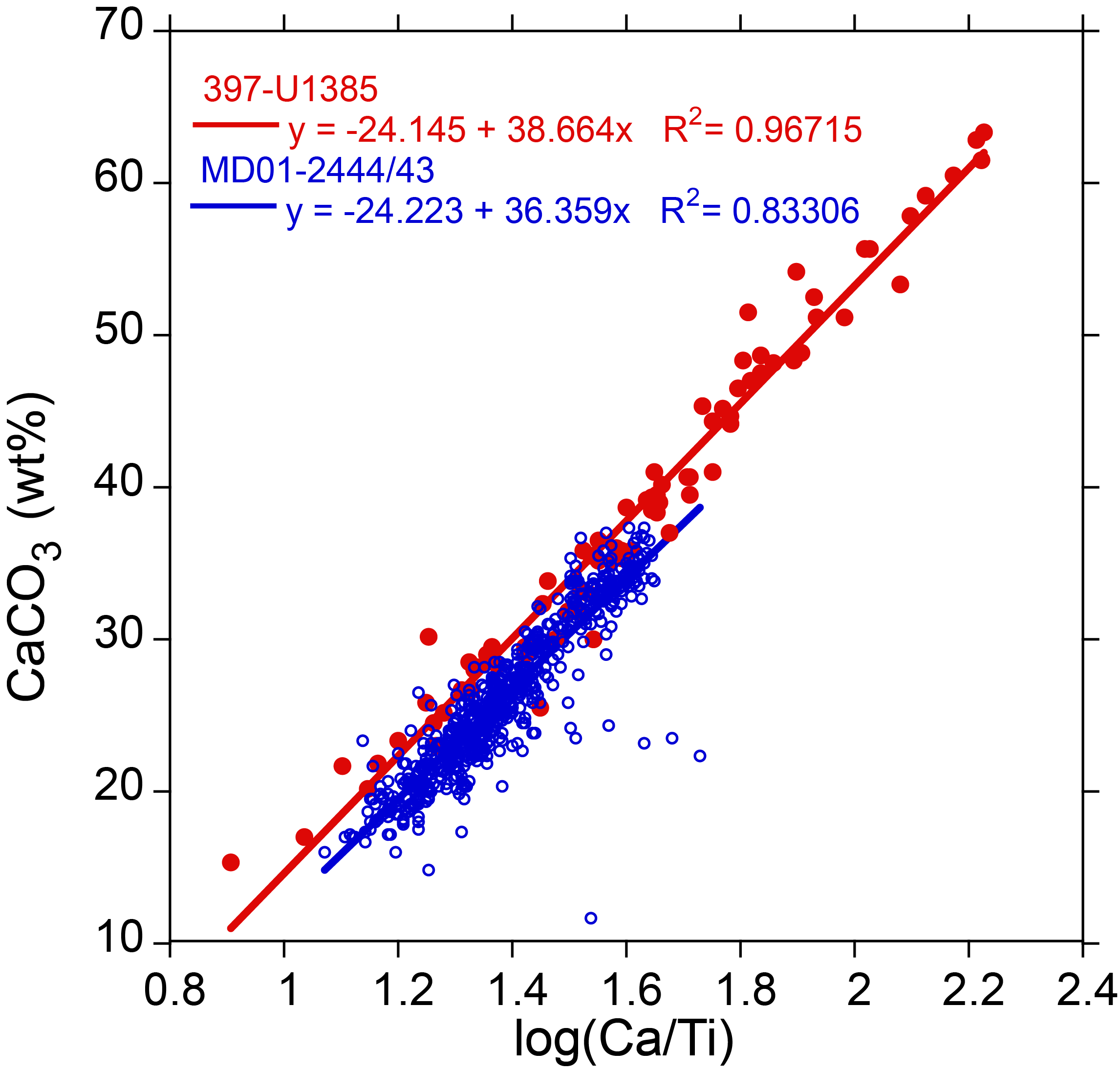
Figure F3. Comparison of CaCO3 and log(Ca/Ti).
Previous regression analyses of log(Ca/Ti) and CaCO3 content from Piston Cores MD01-2444 and MD01-2443 also revealed strong correlations (Hodell et al., 2013a). The slopes of the regression equations are consistent within analytical error, with differences in intercepts attributed to variations in sediment water content. Notably, Site 397-U1385 cores were measured shortly after recovery, whereas Piston Cores MD01-2443 and MD01-2444 were analyzed over a decade later, allowing for postrecovery water loss.
2.2. Oxygen isotope stratigraphy
Oxygen and carbon isotope measurements were performed on the planktonic foraminifer Globigerina bulloides from the 250–300 µm size fraction. For benthic foraminifers, primarily Cibicidoides wuellerstorfi and occasionally Cibicidoides mundulus were used for analysis from the >150 µm size fraction. Analytical procedures followed the methods described in Hodell et al. (2015).
2.3. Stratigraphic correlation
The methodology for composite section and splice construction followed standard IODP protocols and mirrored the procedures used to generate the shipboard splice during Expedition 397 (Abrantes et al., 2024a). Depths on the core depth below seafloor, Method A (CSF-A), scale (equivalent to mbsf) were adjusted using bespoke IODP Correlator software to align correlative features in the Ca/Ti records, resulting in a revised depth framework: core composite depth below seafloor (CCSF). The calculated depth offsets for each core are provided in the affine table (see TABLES in Supplementary material). Upon completion of the affine table, a spliced composite section was constructed by selecting continuous, overlapping intervals from multiple holes to produce a stratigraphically complete record for Site U1385 (see TABLES in Supplementary material). The updated affine (CCSF-397-U1385-FGHIJ-20250507-Hodell) and splice (SPLICE-397-U1385-FGHIJ-20250507-Hodell) tables are also available from the IODP Library Information Management System (LIMS) database at https://web.iodp.tamu.edu/LORE.
3. Results
3.1. Filling the gap at Site 339-U1385
Site 339-U1385 contains a stratigraphic hiatus that removed part of Termination V and MIS 11. Recovery of MIS 11 has proven difficult during the two expeditions; however, Core 397-U1385I-6H captured the high-carbonate, sticky mud deposited during this interval (Figures F4, F5). The Ca/Ti record clearly shows two peaks related to the two precession minima that occurred during MIS 11e. Oxygen isotope analysis of foraminifers further confirms the presence of Termination V and MIS 11 in Core 6H (Figure F6).
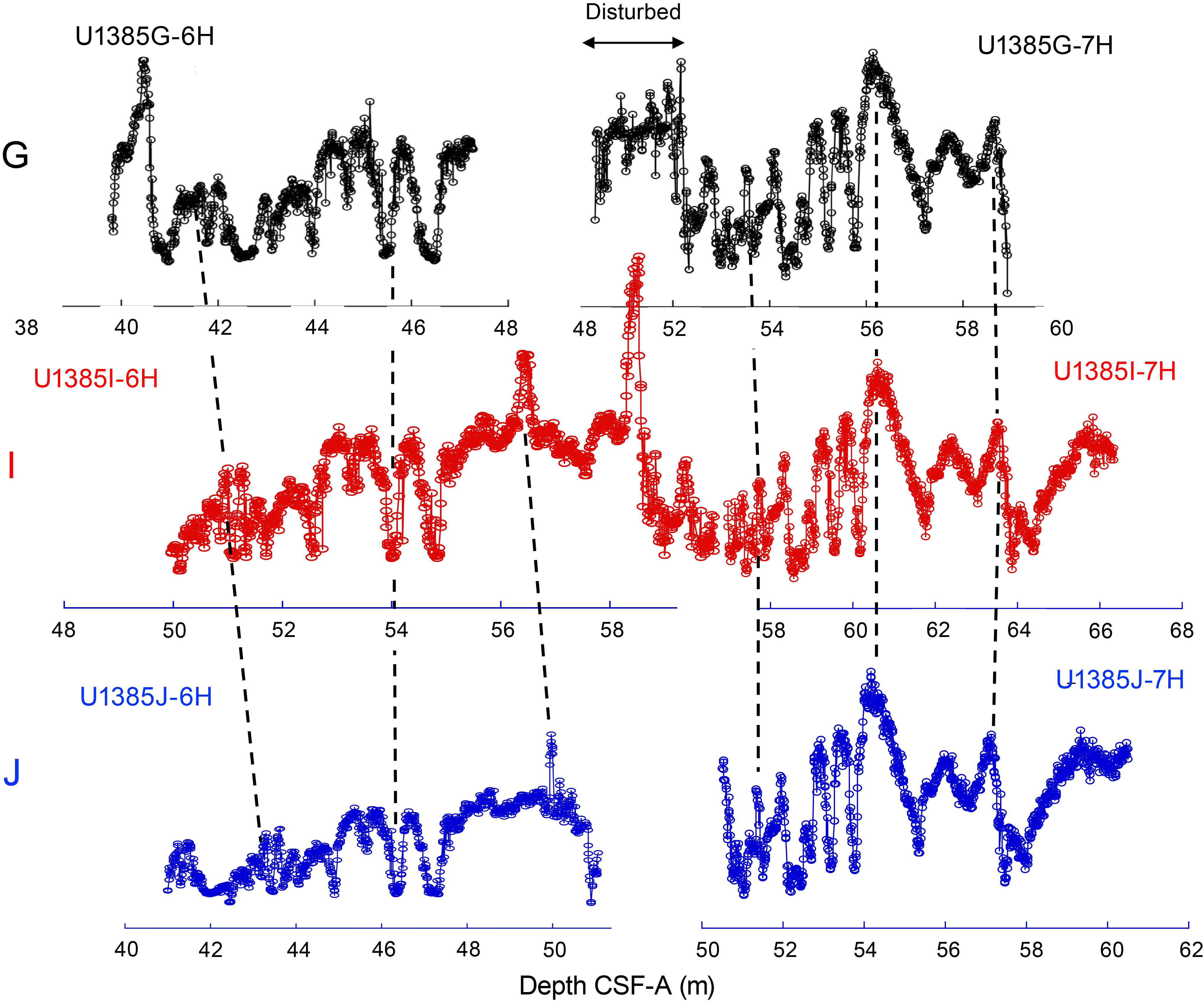
Figure F4. Ca/Ti signals.
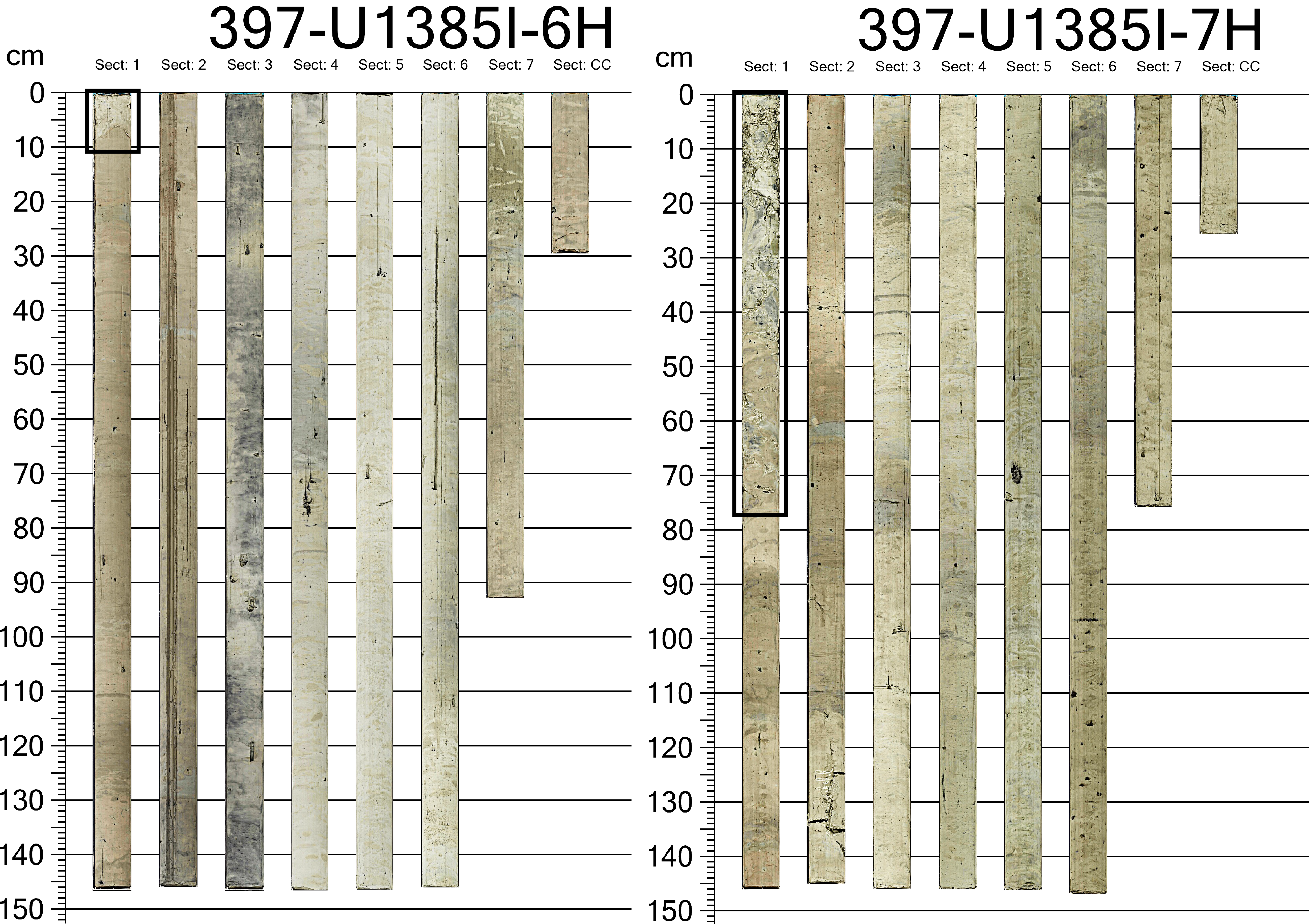
Figure F5. Core photographs.
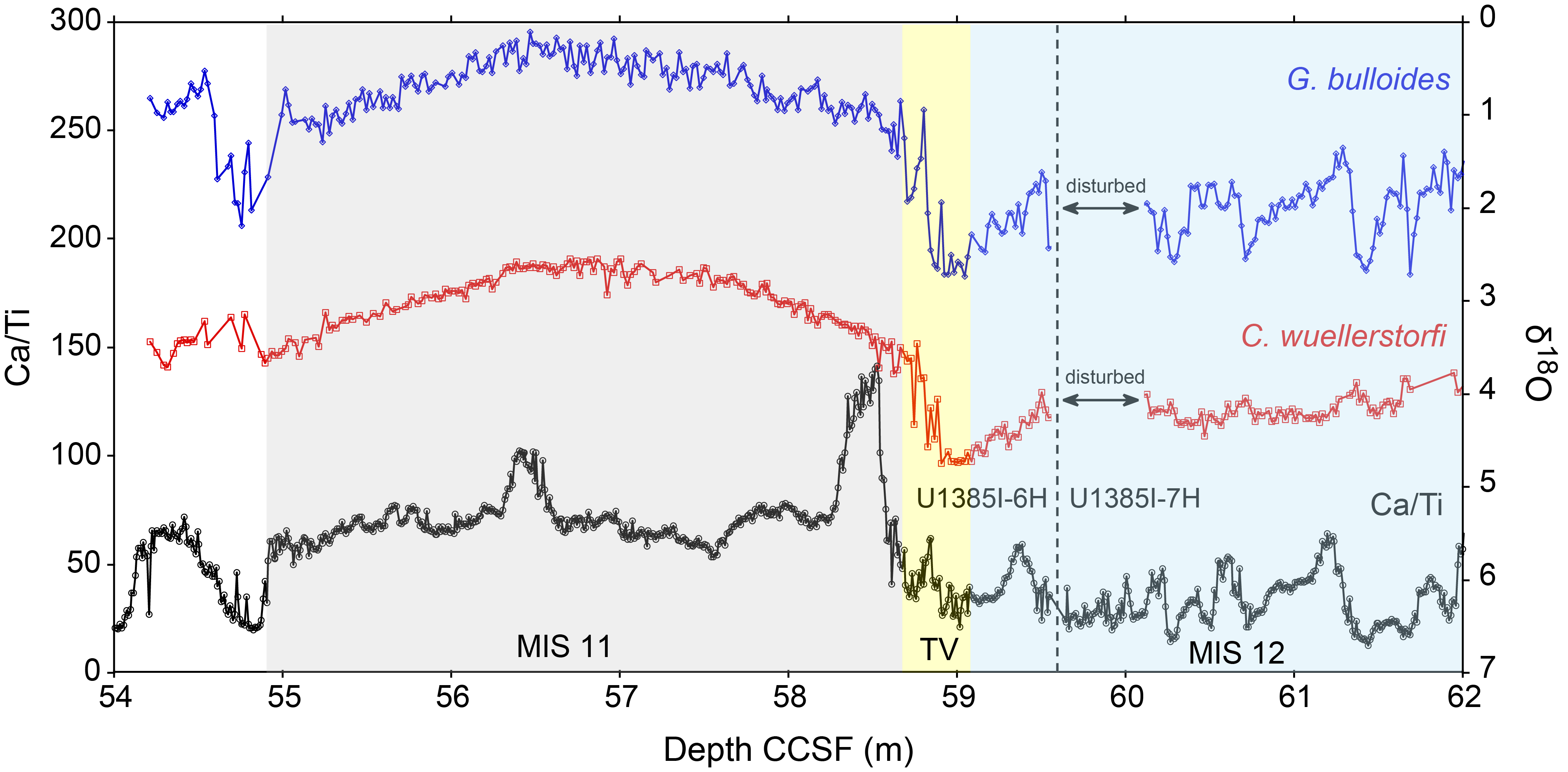
Figure F6. Oxygen isotopes and Ca/Ti.
To splice the missing sequence into the Site 339-U1385 composite, a 4.46 m interval from Core 397-U1385I-6H (Sections 6H-4, 70 cm, to 6H-7, 75 cm) was inserted (Figure F7). This interval was placed at 53.858 corrected revised meters composite depth (crmcd) in the Site 339-U1385 composite depth scale, as defined by Hodell et al. (2015). Consequently, the remaining portion of the 339-U1385 composite section was shifted downward by 2.192 m, beginning at 56.128 crmcd, which is redefined as 58.320 crmcd*. New age-depth tie points were added to the existing age model to assign ages to the MIS 11/Termination V interval inserted from Site 397-U1385.
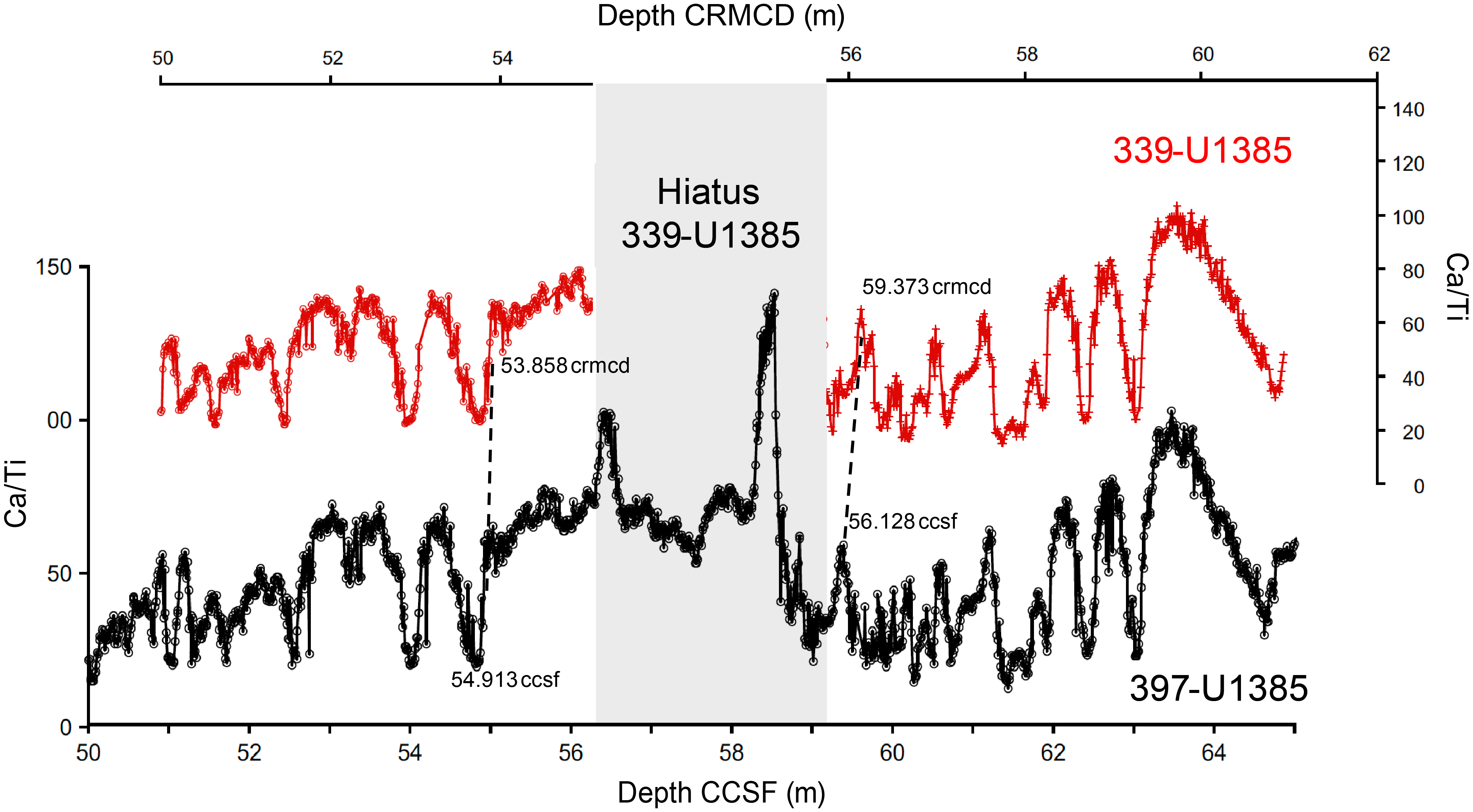
Figure F7. Tie points.
3.2. Revised affine and splice tables for Site 397-U1385
During Expedition 397, a shipboard splice was constructed to 452.7 m CCSF by correlating physical properties across five holes (U1385F–U1385J) (Hodell et al., 2024a). The original affine table and splice table were subsequently revised ahead of the Expedition 397 sampling party at the Bremen Core Repository (BCR) using high-resolution Ca/Ti data obtained from XRF core scanning. This revised sampling splice (SPLICE-397-U1385-FGHIJ-20230426) served as the primary reference for guiding sample selection.
Minor revisions to the sampling splice were necessary following the sampling party when comparison with IODP Sites U1586 and U1587 revealed a duplicated cycle in the Pliocene section of Site U1385. Every effort was made to adhere as closely as possible to the original sampling splice to ensure that discrete samples will fall on the revised splice, minimizing potential gaps. The updated affine and splice tables for Site 397-U1385 are presented in TABLES in Supplementary material and are available from the LIMS database at https://web.iodp.tamu.edu/LORE.
3.3. Correlating Site 397-U1385 to Site 339-U1385
Dynamic time warping is a family of algorithms that optimally aligns two time series by stretching and squeezing one series to match the other. We used the Match algorithm (Lisiecki and Lisiecki, 2002) to optimally align the spliced Ca/Ti signal of Site 397-U1385 with that of Site 339-U1385 (Figure F7). The Ca/Ti signals were first smoothed with a Gaussian process (GP) filter from the GPy Python library (https://gpy.readthedocs.io/en/deploy/GPy.core.html with a Matern32 kernel). This treatment allowed for alignment of the records to within a few centimeters accuracy. Match provides default penalty settings for the length of the equivalent sections (nomatch), average scaling of the mapping (speedpenalty), deviation from constant scaling of the alignment (speedchange), and adherence to the inserted tie point (tiepenalty). The speedpenalty and speedchange were relaxed slightly to improve the total penalty score by ~10% compared to the default settings. The warping function consists of 1198 match pairs of CCSF depths at Site 397-U1385 to equivalent crmcd* depths at Site 339-U1385. Linear interpolation between match pair points is used to calculate the crmcd* depth for any CCSF depth value. The base of the Site 339-U1385 record (168.702 crmcd*) corresponds to 178.4 m CCSF. Below this level, 9.698 is subtracted from the Site 397-U1385 CCSF depth to calculate crmcd*.
3.4. Chronology
For the past 1.45 My, the age model for Site 397-U1385 was obtained by precisely correlating its Ca/Ti record with that of Site 339-U1385 (Figure F8). This high-resolution correlation enables the direct transfer of any existing age model from Site 339-U1385 to Site 397-U1385 (Figure F9).
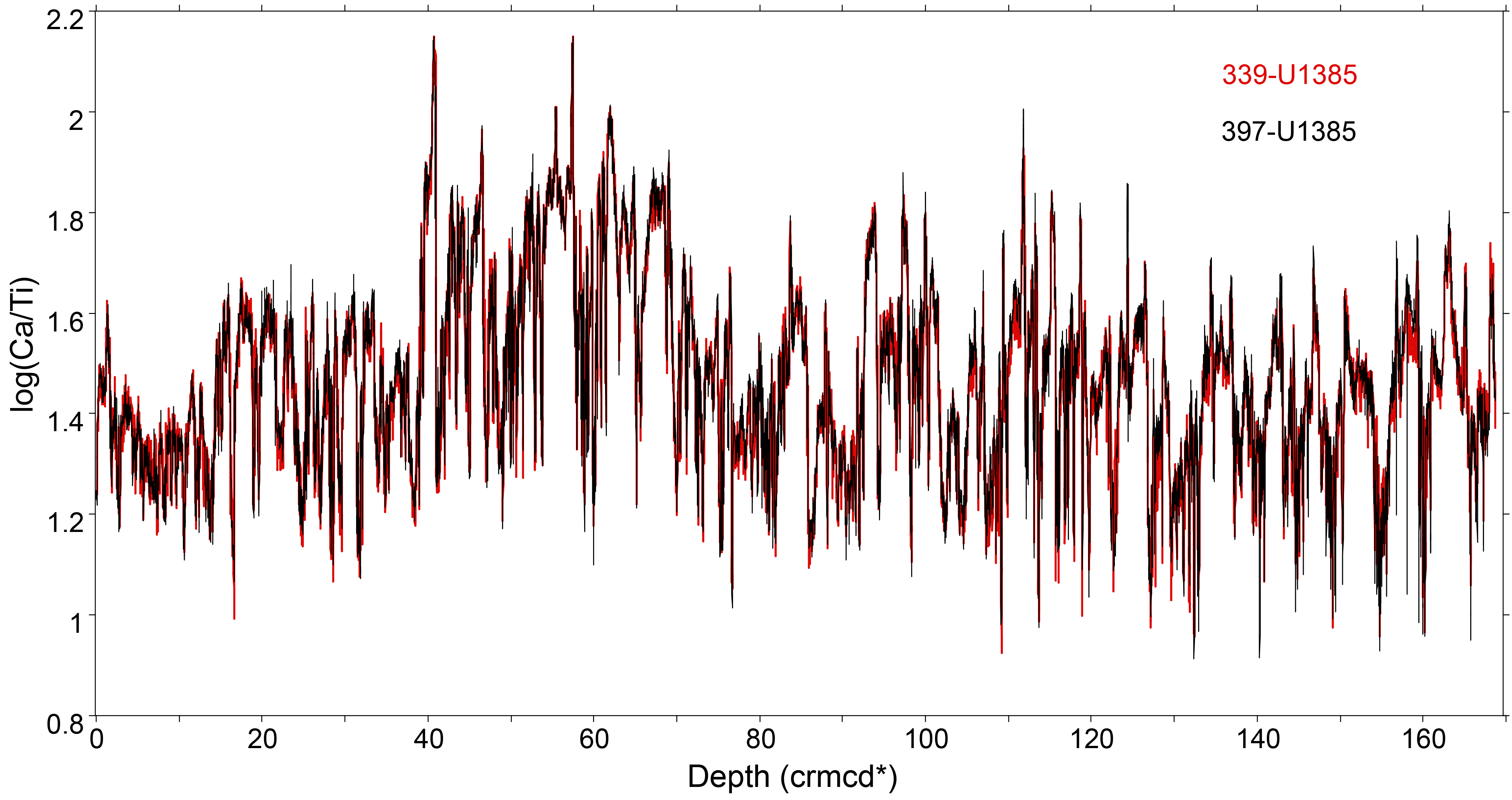
Figure F8. Comparison of Ca/Ti signals.
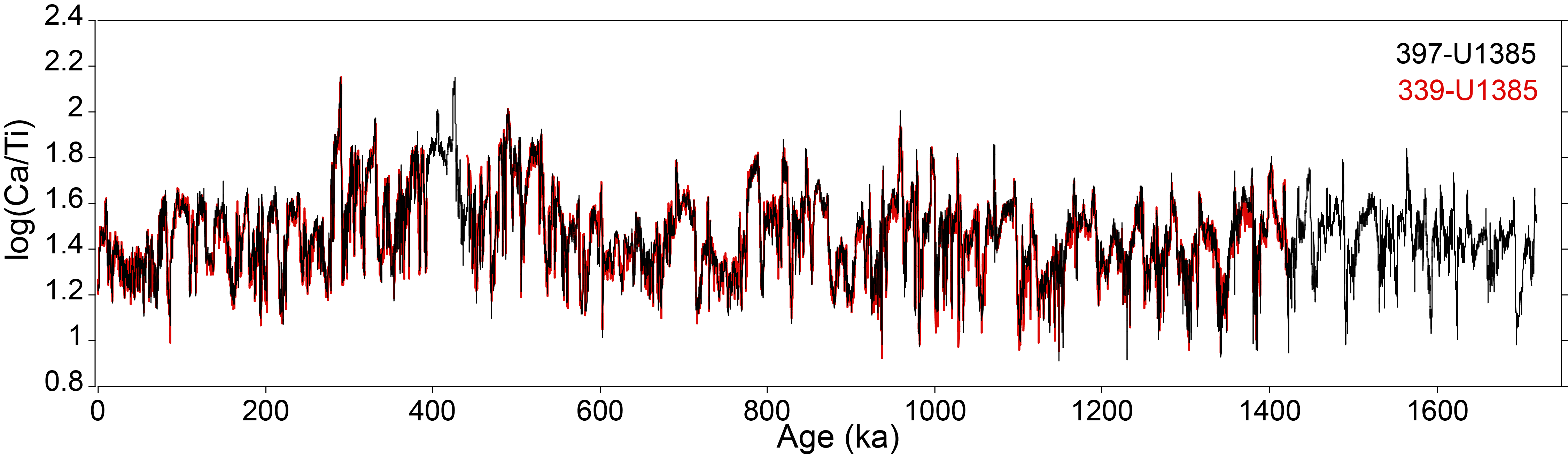
Figure F9. Log(Ca/Ti) records with overlap for last 1450 ky.
To assess the stratigraphy below 1.45 Ma, oxygen isotopes were measured on benthic foraminifers and compared with the LR04 ProbStack (Ahn et al., 2017; Lisiecki and Raymo, 2005). Because some regional differences exist between Atlantic δ18O and the globally stacked record (Zhou et al., 2024), we also compared the Site U1385 benthic δ18O record to Integrated Ocean Drilling Program North Atlantic Site U1308 (Hodell and Channell, 2016).
The Site 397-U1385 isotope record overlaps with Site 339-U1385 for MISs 41–47, where the two records are in good agreement (Figure F10). Oxygen isotope stages are recognized to MIS 61, where a hiatus occurs that removed the interval between ~1.72 and 1.87 Ma, corresponding approximately to MISs 62–70. The oxygen isotope record continues with MIS 71 below the hiatus. The hiatus occurs somewhere between Samples 397-U1385G-20X-5, 125 cm, and 20X-6, 85 cm, although there are no obvious signs of erosion or slumping (e.g., convoluted bedding). Further study of this hiatus interval is ongoing at Site U1587 with the hope this gap at Site U1385 can be partly or wholly filled with material from another site.
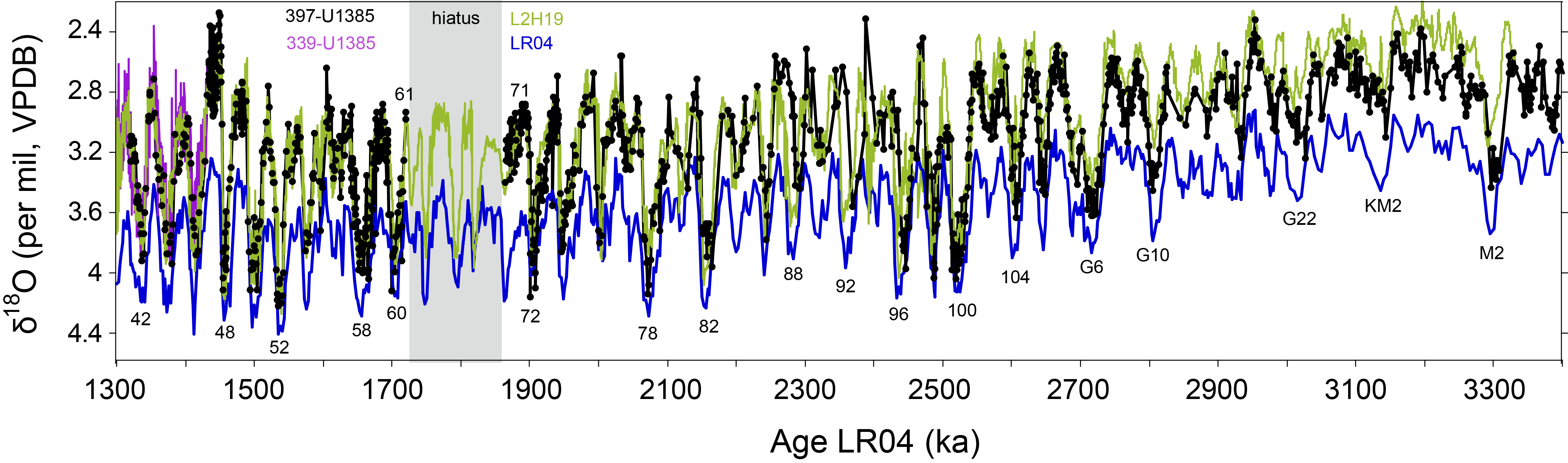
Figure F10. Benthic oxygen isotope record.
Beyond 2 Ma, strong precession-driven cycles in physical properties (e.g., color reflectance and magnetic susceptibility) and XRF-derived elemental ratios (e.g., Ca/Ti) provided the basis for constructing an astronomically tuned age model for Site 397-U1385. Peaks in Ca/Ti were aligned with precession minima, corresponding to maxima in Northern Hemisphere summer insolation with no lag. The amplitude modulation of precession by eccentricity provides a robust framework for unambiguous tuning between ~2 and 5.3 Ma (Figure F11). The reproducibility of the Ca/Ti precession cycles at Sites U1385, U1586 (Abrantes et al., 2024b), and U1587 supports the continuity of the spliced sections. A low-resolution benthic oxygen isotope record permits identification of MISs to 3.4 Ma (Figure F10). The generally good agreement between Site U1385 benthic δ18O on the precession-tuned timescale and LR04 stack provides support for the astrochronology.
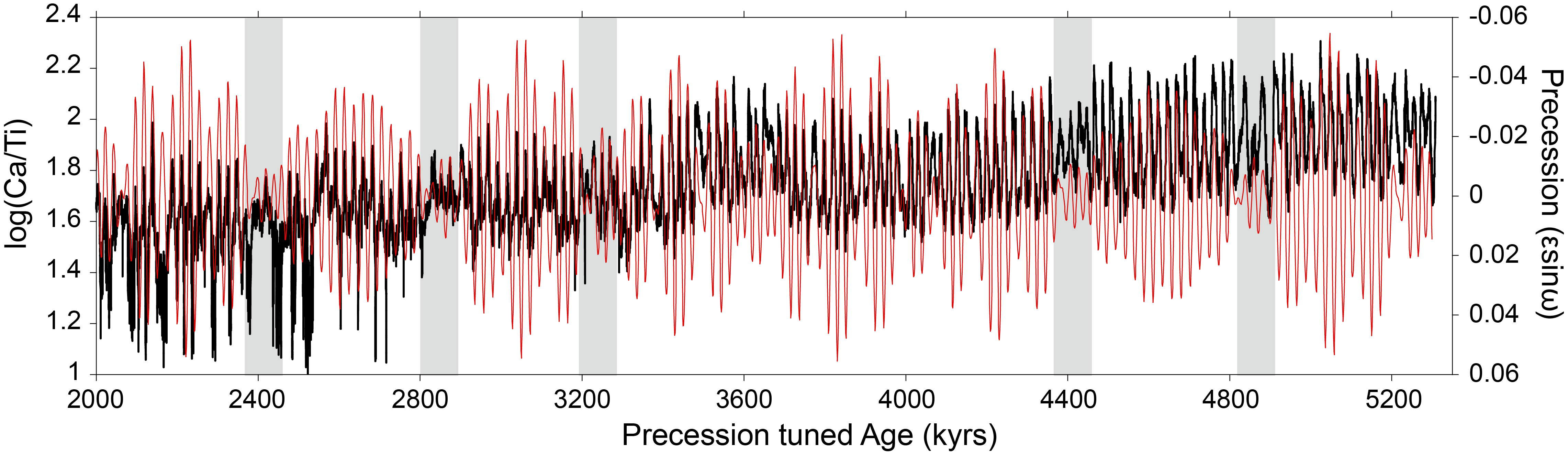
Figure F11. Tuning of peaks in log(Ca/Ti).
Sedimentation rates average 5.4 cm/ky from 5.3 to 3 Ma when they begin to increase until leveling off at ~2.5 Ma (Figure F12). This increase reflects enhanced clay delivery to the site during times of lowered sea level associated with stronger glaciations following the intensification of Northern Hemisphere Glaciation (Hodell et al., submitted). Sedimentation rates average 11 cm/ky during the Quaternary. The sampling frequency of the XRF data is 1 cm, which translates into an average sampling rate in time of about 200 y for the Pliocene older than 3 Ma and 100 y thereafter in the latest Pliocene and Quaternary. Although the actual resolution is likely to be greater because of bioturbation and drilling disturbance (e.g., biscuiting in extended core barrel [XCB] cores), it is nevertheless high enough to detect millennial events.
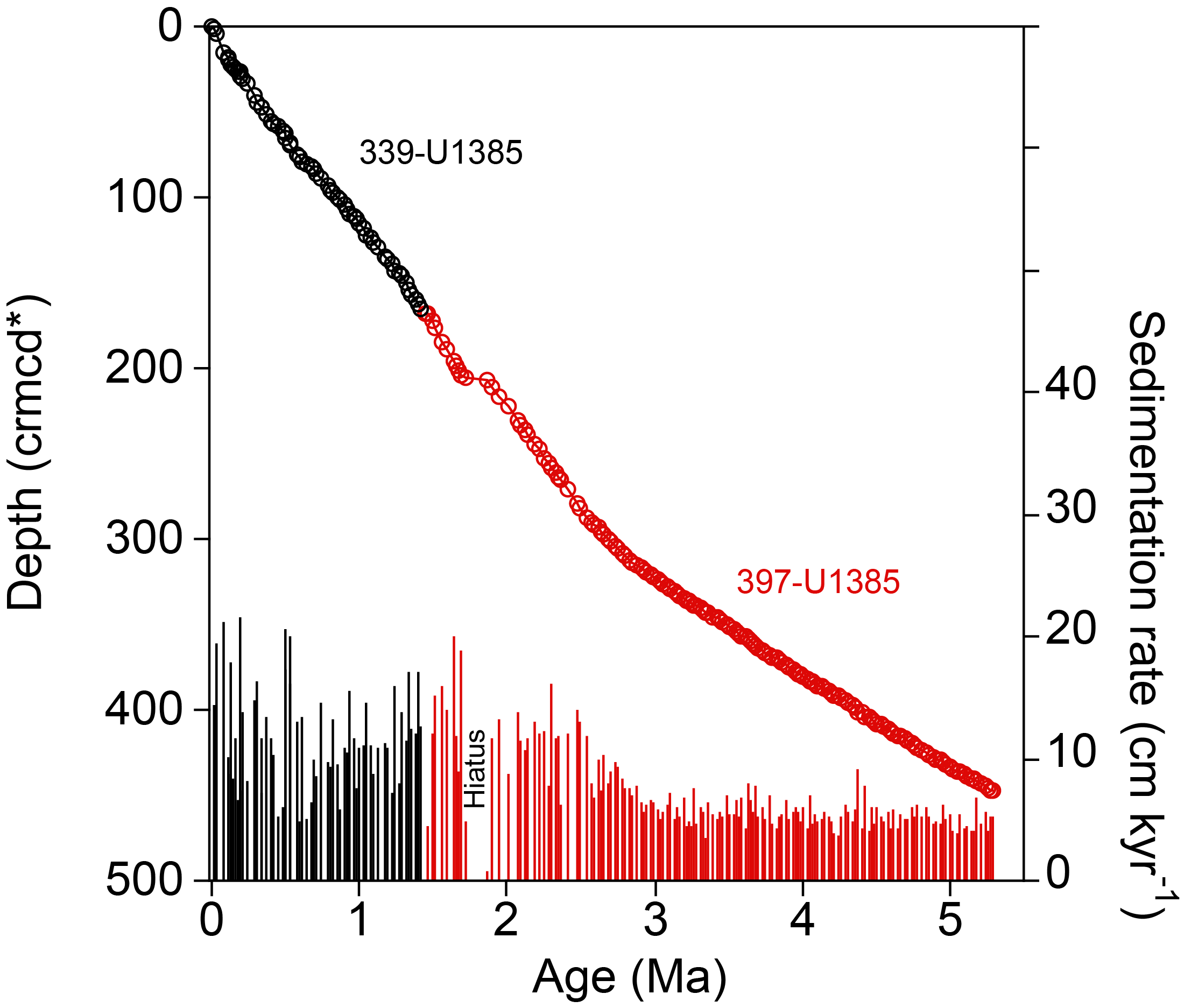
Figure F12. Age-depth relationship and interval sedimentation rates.
4. Summary
Site U1385 serves as a stratigraphic reference section for the other Expedition 397 sites because of its well-established stratigraphy and chronology. Using high-resolution postcruise XRF core scanning data, we constructed a revised composite depth scale and splice for Site 397-U1385 to 448.34 m CCSF. We also filled the stratigraphic gap at Site 339-U1385 caused by the MIS 11/Termination V hiatus using the sediment sequence recovered in Hole U1385I (see FIGURE in Supplementary material for an interactive graph of planktonic and benthic oxygen isotopes and Ca/Ti for the last 1500 ky on the LR04 timescale with approximate marine isotope stage boundaries of Lisiecki and Raymo, 2005).
The Ca/Ti records of Sites 339-U1385 and 397-U1385 were correlated using dynamic programming, enabling the transfer of the isotope stratigraphy and chronology from Site 339-U1385 to Site 397-U1385 for the past 1.45 My. A preliminary benthic oxygen isotope record indicates a hiatus between ~1.72 and 1.87 Ma, corresponding to MISs 62–70. Beyond this interval, prominent precession cycles in physical properties and elemental ratios (e.g., Ca/Ti) allowed the construction of an astronomically tuned age model that extends to the base of the Pliocene.
The Site 397-U1385 record provides a near-continuous 5.3 My long record of changes in sediment composition at millennial resolution to the base of the Pliocene (Figure F13). The interpretation and paleoclimatic significance of the XRF data are discussed in Hodell et al. (submitted).
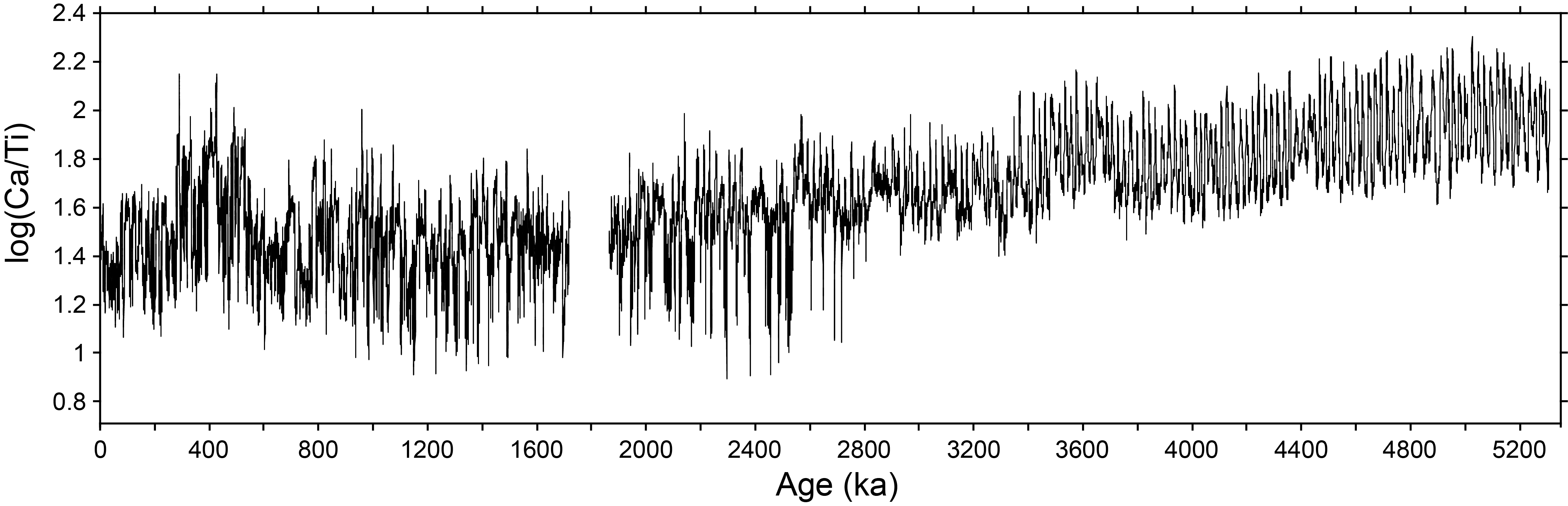
Figure F13. Log(Ca/Ti) for last 5300 ky.
5. Data availability
Ca/Ti for all measured sections are included in TABLES in Supplementary material and permanently archived at Zenodo (https://zenodo.org/communities/iodp). Ca/Ti and Zr/Sr are also provided for the spliced stratigraphic section of Sites 339-U1385 and 397-U1385. Complementary data sets have been developed for the other Expedition 397 sites, including Sites U1586 (Abrantes et al., 2025), U1587 (Alvarez Zarikian et al., in press), and U1588 (S. Kaboth-Bahr, unpubl. data).
6. Acknowledgments
We thank the International Ocean Discovery Program for entrusting us with the archive core halves of Site U1385 for XRF analysis in the Godwin Laboratory for Paleoclimate Research in Cambridge. We are grateful to William Kay who helped with sampling and XRF analysis, Jeannie Booth who helped with sieving and picking foraminifers, and Xi Chen who helped with isotope analysis. This work was supported by the Natural Environment Research Council (Grant number NE/X002101/1) to D.A. Hodell.
References
Abrantes, F., Hodell, D.A., Alvarez Zarikian, C.A., Brooks, H.L., Clark, W.B., Dauchy-Tric, L.F.B., dos Santos Rocha, V., Flores, J.-A., Herbert, T.D., Hines, S.K.V., Huang, H.-H.M., Ikeda, H., Kaboth-Bahr, S., Kuroda, J., Link, J.M., McManus, J.F., Mitsunaga, B.A., Nana Yobo, L., Pallone, C.T., Pang, X., Peral, M.Y., Salgueiro, E., Sanchez, S., Verma, K., Wu, J., Xuan, C., and Yu, J., 2024a. Expedition 397 methods. In Hodell, D.A., Abrantes, F., Alvarez Zarikian, C.A., and the Expedition 397 Scientists, Iberian Margin Paleoclimate. Proceedings of the International Ocean Discovery Program, 397: College Station, TX (International Ocean Discovery Program). https://doi.org/10.14379/iodp.proc.397.102.2024
Abrantes, F., Hodell, D.A., Alvarez Zarikian, C.A., Brooks, H.L., Clark, W.B., Dauchy-Tric, L.F.B., dos Santos Rocha, V., Flores, J.-A., Herbert, T.D., Hines, S.K.V., Huang, H.-H.M., Ikeda, H., Kaboth-Bahr, S., Kuroda, J., Link, J.M., McManus, J.F., Mitsunaga, B.A., Nana Yobo, L., Pallone, C.T., Pang, X., Peral, M.Y., Salgueiro, E., Sanchez, S., Verma, K., Wu, J., Xuan, C., and Yu, J., 2024b. Site U1586. In Hodell, D.A., Abrantes, F., Alvarez Zarikian, C.A., and the Expedition 397 Scientists, Iberian Margin Paleoclimate. Proceedings of the International Ocean Discovery Program, 397: College Station, TX (International Ocean Discovery Program). https://doi.org/10.14379/iodp.proc.397.103.2024
Abrantes, F., Magalhães, V., Hodell, D.A., Herbert, T.D., Alonso-Garcia, M., Castaño, M., Ferreira, F., Freitas, M., Gebara, L., Gil, I., Gonzáles-Martín, M., Lopes, A., Lopes, C., Matos, L., Mega, A., Molina, G., Naughton, F., Oliveira, D., Rebotim, A., Rodrigues, T., Salgueiro, E., Santana, A., Treyos-Tamayo, R., Alvarez Zarikian, C.A., and the Expedition 397 Scientists, 2025. Data report: an improved splice using XRF data, IODP Expedition 397 Site U1586. In Hodell, D.A., Abrantes, F., Alvarez Zarikian, C.A., and the Expedition 397 Scientists, Iberian Margin Paleoclimate. Proceedings of the International Ocean Discovery Program, 397: College Station, TX (International Ocean Discovery Program). https://doi.org/10.14379/iodp.proc.397.202.2025
Ahn, S., Khider, D., Lisiecki, L.E., and Lawrence, C.E., 2017. A probabilistic Pliocene–Pleistocene stack of benthic δ18O using a profile hidden Markov model. Dynamics and Statistics of the Climate System, 2(1):dzx002. https://doi.org/10.1093/climsys/dzx002
Alvarez Zarikian, C.A., Herbert, T.D., Hodell, D.A., McManus, J.F., Nana-Yobo, L., Alonso-Garcia, M., Flores, J.-A., Huai-Hsuan, M.H., Haygood, L., Kars, M., Yeon, J., Abrantes, F. and the Expedition 397 Scientists, in press. Data report: X-ray fluorescence core scanning and revised composite section of Pliocene–Pleistocene sediments from IODP Expedition 397 Site U1587. In Hodell, D.A., Abrantes, F., Alvarez Zarikian, C.A., and the Expedition 397 Scientists, Iberian Margin Paleoclimate. Proceedings of the International Ocean Discovery Program, 397: College Station, TX (International Ocean Discovery Program).
Dunlea, A.G., Murray, R.W., Tada, R., Alvarez-Zarikian, C.A., Anderson, C.H., Gilli, A., Giosan, L., Gorgas, T., Hennekam, R., Irino, T., Murayama, M., Peterson, L.C., Reichart, G.-J., Seki, A., Zheng, H., and Ziegler, M., 2020. Intercomparison of XRF core scanning results from seven labs and approaches to practical calibration. Geochemistry, Geophysics, Geosystems, 21(9):e2020GC009248. https://doi.org/10.1029/2020GC009248
Expedition 339 Scientists, 2013. Site U1385. In Stow, D.A.V., Hernández-Molina, F.J., Alvarez Zarikian, C.A., and the Expedition 339 Scientists, Proceedings of the Integrated Ocean Drilling Program. 339: Tokyo (Integrated Ocean Drilling Program Management International, Inc.). https://doi.org/10.2204/iodp.proc.339.103.2013
Flecker, R., Ducassou, E., Williams, T., and the Expedition 401 Scientists, 2024. Expedition 401 Preliminary Report: Mediterranean–Atlantic Gateway Exchange. International Ocean Discovery Program. https://doi.org/10.14379/iodp.pr.401.2024
Hodell, D.A., Abrantes, F., Alvarez Zarikian, C.A. et al., submitted. Onset of millennial climate variability with the intensification of Northern Hemisphere glaciation. Science.
Hodell, D.A., Abrantes, F., Alvarez Zarikian, C.A., Brooks, H.L., Clark, W.B., Dauchy-Tric, L.F.B., dos Santos Rocha, V., Flores, J.-A., Herbert, T.D., Hines, S.K.V., Huang, H.-H.M., Ikeda, H., Kaboth-Bahr, S., Kuroda, J., Link, J.M., McManus, J.F., Mitsunaga, B.A., Nana Yobo, L., Pallone, C.T., Pang, X., Peral, M.Y., Salgueiro, E., Sanchez, S., Verma, K., Wu, J., Xuan, C., and Yu, J., 2024a. Expedition 397 summary. In Hodell, D.A., Abrantes, F., Alvarez Zarikian, C.A., and the Expedition 397 Scientists, Iberian Margin Paleoclimate. Proceedings of the International Ocean Discovery Program, 397: College Station, TX (International Ocean Discovery Program). https://doi.org/10.14379/iodp.proc.397.101.2024
Hodell, D.A., Abrantes, F., Alvarez Zarikian, C.A., Brooks, H.L., Clark, W.B., Dauchy-Tric, L.F.B., dos Santos Rocha, V., Flores, J.-A., Herbert, T.D., Hines, S.K.V., Huang, H.-H.M., Ikeda, H., Kaboth-Bahr, S., Kuroda, J., Link, J.M., McManus, J.F., Mitsunaga, B.A., Nana Yobo, L., Pallone, C.T., Pang, X., Peral, M.Y., Salgueiro, E., Sanchez, S., Verma, K., Wu, J., Xuan, C., and Yu, J., 2024b. Site U1385. In Hodell, D.A., Abrantes, F., Alvarez Zarikian, C.A., and the Expedition 397 Scientists, Iberian Margin Paleoclimate. Proceedings of the International Ocean Discovery Program, 397: College Station, TX (International Ocean Discovery Program). https://doi.org/10.14379/iodp.proc.397.105.2024
Hodell, D.A., and Channell, J.E.T., 2016. Mode transitions in Northern Hemisphere glaciation: co-evolution of millennial and orbital variability in Quaternary climate. Climate of the Past, 12(9):1805–1828. https://doi.org/10.5194/cp-12-1805-2016
Hodell, D.A., Crowhurst, S.J., Lourens, L., Margari, V., Nicolson, J., Rolfe, J.E., Skinner, L.C., Thomas, N.C., Tzedakis, P.C., Mleneck-Vautravers, M.J., and Wolff, E.W., 2023. A 1.5-million-year record of orbital and millennial climate variability in the North Atlantic. Climate of the Past, 19(3):607–636. https://doi.org/10.5194/cp-19-607-2023
Hodell, D., Crowhurst, S., Skinner, L., Tzedakis, P.C., Margari, V., Channell, J.E.T., Kamenov, G., Maclachlan, S., and Rothwell, G., 2013a. Response of Iberian margin sediments to orbital and suborbital forcing over the past 420 ka. Paleoceanography and Paleoclimatology, 28(1):185–199. https://doi.org/10.1002/palo.20017
Hodell, D.A., Crowhurst, S.J., Mleneck-Vautravers, M.J., Rolfe, J.E., Du, M., Herbert, T.D., Huang, H.-H.M., Abrantes, F., Alvarez Zarikian, C.A., and the Expedition 397 Scientists, 2026. Supplementary material, https://doi.org/10.14379/iodp.proc.397.204supp.2026. In Hodell, D.A., Crowhurst, S.J., Mleneck-Vautravers, M.J., Rolfe, J.E., Du, M., Herbert, T.D., Huang, H.-H.M., Abrantes, F., Alvarez Zarikian, C.A., and the Expedition 397 Scientists, Data report: composite section and chronology of IODP Sites 339-U1385 and 397-U1385 based on postcruise XRF analysis. In Hodell, D.A., Abrantes, F., Alvarez Zarikian, C.A., and the Expedition 397 Scientists, Iberian Margin Paleoclimate. Proceedings of the International Ocean Discovery Program, 397: College Station, TX (International Ocean Discovery Program).
Hodell, D., Lourens, L., Crowhurst, S., Konijnendijk, T., Tjallingii, R., Jiménez-Espejo, F., Skinner, L., Tzedakis, P.C., and the Shackleton Site Project Members, 2015. A reference time scale for Site U1385 (Shackleton Site) on the SW Iberian Margin. Global and Planetary Change, 133:49–64. https://doi.org/10.1016/j.gloplacha.2015.07.002
Hodell, D.A., Lourens, L., Stow, D.A.V., Hernández-Molina, F. Javier, and Alvarez-Zarikian, C.A., 2013b. The "Shackleton Site" (IODP Site U1385) on the Iberian Margin. Scientific Drilling, 16:13–19. https://doi.org/10.5194/sd-16-13-2013
Lisiecki, L.E., and Lisiecki, P.A., 2002. Application of dynamic programming to the correlation of paleoclimate records. Paleoceanography, 17(4):1049. https://doi.org/10.1029/2001PA000733
Lisiecki, L.E., and Raymo, M.E., 2005. A Pliocene-Pleistocene stack of 57 globally distributed benthic δ18O records. Paleoceanography, 20(1):PA1003. https://doi.org/10.1029/2004PA001071
Richter, T.O., van der Gaast, S., Koster, B., Vaars, A., Gieles, R., de Stigter, H.C., De Haas, H., and van Weering, T.C.E., 2006. The Avaatech XRF Core Scanner: technical description and applications to NE Atlantic sediments. In Rothwell, R.G., New Techniques in Sediment Core Analysis. Geological Society Special Publication, 267: 39–50. https://doi.org/10.1144/GSL.SP.2006.267.01.03
Tjallingii, R., Röhl, U., Kölling, M., and Bickert, T., 2007. Influence of the water content on X-ray fluorescence core-scanning measurements in soft marine sediments. Geochemistry, Geophysics, Geosystems, 8(2):Q02004. https://doi.org/10.1029/2006GC001393
Weltje, G.J., and Tjallingii, R., 2008. Calibration of XRF core scanners for quantitative geochemical logging of sediment cores: theory and application. Earth and Planetary Science Letters, 274(3–4):423–438. https://doi.org/10.1016/j.epsl.2008.07.054
Zhou, Y., Lisiecki, L.E., Lee, T., Gebbie, G., and Lawrence, C., 2024. Regional benthic δ18O stacks for the "41-Kyr World"—an Atlantic-Pacific divergence between 1.8 and 1.9 Ma. Geophysical Research Letters, 51(13):e2023GL107858. https://doi.org/10.1029/2023GL107858
Zitellini, N., Gràcia, E., Matias, L., Terrinha, P., Abreu, M.A., DeAlteriis, G., Henriet, J.P., Dañobeitia, J.J., Masson, D.G., Mulder, T., Ramella, R., Somoza, L., and Diez, S., 2009. The quest for the Africa–Eurasia plate boundary west of the Strait of Gibraltar. Earth and Planetary Science Letters, 280(1–4):13–50. https://doi.org/10.1016/j.epsl.2008.12.005