Lucchi, R.G., St. John, K.E.K., Ronge, T.A., and the Expedition 403 Scientists
Proceedings of the International Ocean Discovery Program Volume 403
publications.iodp.org
https://doi.org/10.14379/iodp.proc.403.201.2026
Data report: X-ray fluorescence core scanning of IODP Site U1623, Expedition 403, Eastern Fram Strait Paleo-Archive1
Alba González-Lanchas,2a Olga Libman-Roshal,2a Lucinda C. Duxbury,2 A. Catalina Gebhardt,2 Aruggoda K. Isuri U. Kapuge,2 Lindsey Rose Monito,2 Gryphen Goss,2 Brendan Thomas Reilly,2 Lauren Haygood,2 Jesse Yeon,3 Kristen E.K. St. John,2 Renata G. Lucchi,2 Thomas A. Ronge,2 Adriane R. Lam,2 Brancen Redman,4 Larry St. John,5 Maria A. Bárcena,2 Stijn De Schepper,2 Nicole M. Greco,2 Jens Gruetzner,2 Katrine Husum,2 Mutsumi Iizuka,2 Yanguang Liu,2 Yair Rosenthal,2 Yuhi Sakai,2 Yusuke Suganuma,2 Adukkam Veedu Sijinkumar,2 and Yi Zhong2
1 González-Lanchas, A., Libman-Roshal, O., Duxbury, L.C., Gebhardt, A.C., Kapuge, A.K.I.U., Monito, L.R., Goss, G., Reilly, B.T., Haygood, L., Yeon, J., St. John, K.E.K., Lucchi, R.G., Ronge, T.A., Lam, A.R., Redman, B., St. John, L., Bárcena, M.A., De Schepper, S., Greco, N.M., Gruetzner, J., Husum, K., Iizuka, M., Liu, Y., Rosenthal, Y., Sakai, Y., Suganuma, Y., Sijinkumar, A.V., and Zhong, Y., 2026. Data report: X-ray fluorescence core scanning of IODP Site U1623, Expedition 403, Eastern Fram Strait Paleo-Archive. In Lucchi, R.G., St. John, K.E.K., Ronge, T.A., and the Expedition 403 Scientists, Eastern Fram Strait Paleo-Archive. Proceedings of the International Ocean Discovery Program, 403: College Station, TX (International Ocean Discovery Program). https://doi.org/10.14379/iodp.proc.403.201.2026
2 Expedition 403 Scientists’ affiliations. Correspondence author: [email protected]; [email protected]
2a Authors contributed equally to this report.
3 Gulf Coast Repository, Texas A&M University, USA.
4 Boone Pickens School of Geology, Oklahoma State University, USA.
5 Department of Physics, University of Virginia, USA.
Abstract
International Ocean Discovery Program Expedition 403 Eastern Fram Strait Paleo-Archive successfully recovered continuous sedimentary sequences from contourite drifts shaped by the northward flow of the West Spitsbergen Current (WSC) along the western Svalbard margin in the eastern Fram Strait. A total of approximately 5 km of sediment with sedimentation rates appropriate for high-resolution paleoceanographic investigations was recovered from seven sites. Recovered sediments offer a unique opportunity to assess the role of this region during key climatic transitions, the onset of Arctic glaciation, and cryosphere development. Site U1623, located in the southernmost sector of the expedition area on the Bellsund drift, is particularly well suited for reconstructing past variability of the WSC. Here, we present quality-controlled, semiquantitative bulk elemental data obtained from X-ray fluorescence core scanning. This data is integrated with magnetic susceptibility and natural gamma radiation measured during Expedition 403 aboard the research vessel JOIDES Resolution.
1. Introduction
The Arctic Ocean is undergoing rapid environmental transformation, largely driven by human-induced factors. Processes associated with “Arctic amplification” have accelerated the pace of change, making the region one of the fastest evolving environments on the planet (Rantanen et al., 2022). The relatively short length of instrumental records makes it difficult to distinguish natural variability on decadal timescales from anthropogenic influences. To address this limitation, geologic sedimentary archives offer a longer term perspective by averaging out shorter term variations. These records have revealed that the Arctic has experienced substantial climatic fluctuations in the past and has played a central role in shaping Northern Hemisphere climate evolution (e.g., Mahajan et al., 2011; Overland et al., 2011). Despite its importance, our understanding of Arctic climate dynamics remains less developed because of the scarcity of continuous, high-resolution, and datable sedimentary archives.
The Fram Strait is the only deepwater gateway between the Arctic Ocean and the North Atlantic. Situated between the Svalbard archipelago and Greenland, it plays a crucial role in heat exchange between these two major ocean basins, mediated by two opposing oceanic currents. In the eastern part of the strait along the Svalbard margin, the West Spitsbergen Current (WSC), the northernmost branch of the North Atlantic Current, transports warm, saline Atlantic waters northward into the Arctic. This inflow delivers substantial amounts of heat and moisture to the region (Walczowski and Piechura, 2011). Conversely, the East Greenland Current flows southward along the Greenland continental margin in the western Fram Strait, carrying cold, low-salinity polar waters out of the Arctic Ocean. In June–August 2024, International Ocean Discovery Program (IODP) Expedition 403 recovered unprecedented continuous sedimentary sequences from the eastern Fram Strait, directly under the influence of the WSC, over the last ~6 million years (St. John et al., 2026). One of the primary goals of Expedition 403 was to reconstruct past oceanographic variability and ocean-cryosphere evolution across major climatic transitions to gain a deeper understanding of how this region will continue responding to increased anthropogenic forcings. To contribute to these overarching goals, in this data report we present quality-controlled, semiquantitative bulk elemental data obtained from X-ray fluorescence (XRF) core scanning.
The collection of XRF data is a nondestructive qualitative geochemical tool to gain new insights into environmental changes through time that can be accomplished at a resolution of suborbital scale. These data have been used to characterize changes in the surface to deep ocean (e.g., Amadori et al., 2024; Lam et al., 2024; Lowery et al., 2024; Robustelli Test et al., 2024; Routledge et al., 2024; Villa et al., 2024; Wang et al., 2024), refine the lithology of cores and define/refine sedimentary units (e.g., Penkrot et al., 2018; Taylor et al., 2022), infer ice-rafted layers (Hodell et al., 2008), and much more (reviewed in Croudace and Rothwell, 2015). Here, we present an XRF data set for Site U1623 along its splice from the middle Pleistocene to recent. XRF data will help to better characterize sedimentary units and identify temporal trends through time (e.g., Penkrot et al., 2018; Rothwell and Croudace, 2015).
Site U1623 is located in the southernmost sector of the Fram Strait at 76°31.8594′N, 12°34.4276′E, at a water depth of 1708 meters below sea level (mbsl) (Figure F1). The site targeted the Bellsund drift, which formed along the lower continental slope (1700–1800 m water depth) on the western margin of Svalbard, influenced by the WSC (Rebesco et al., 2013). The sedimentary sequence recovered at Site U1623, spanning the middle Pleistocene to recent, is predominantly siliciclastic and consists mainly of dark to greenish gray silty clay, with occasional coarser layers of reddish gray sandy mud and diamictons (St. John et al., 2026).
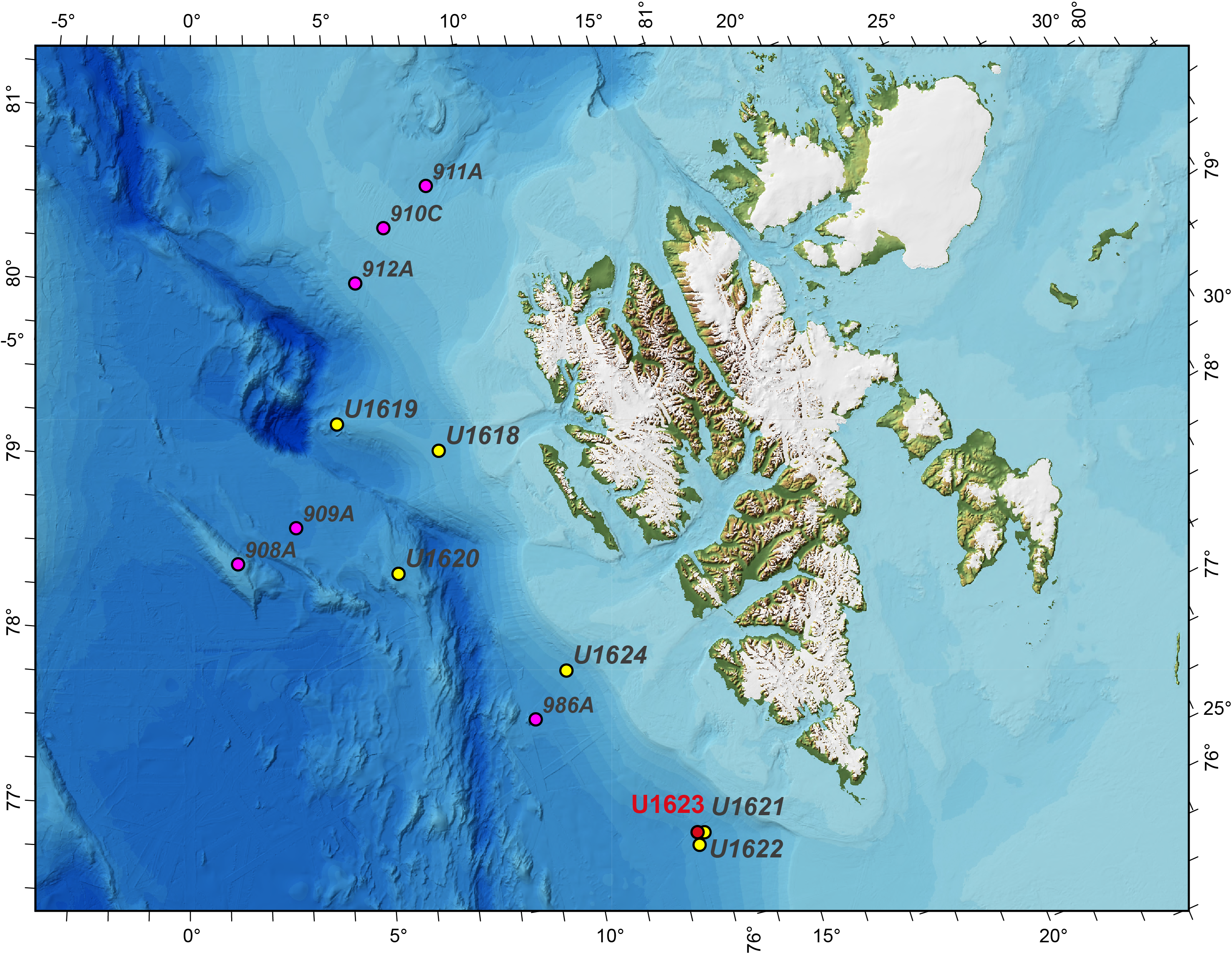
Figure F1. Expedition 403 map.
The sediments are divided into two primary lithostratigraphic units. From the top to the base, Lithostratigraphic Unit I consists of soft to firm silty clay with coarser sandy mud, occasional diamicton, and variable clast content and bioturbation. It features scattered sand patches, interbedded silt layers, variable clast content, and changes in mineralogy and biogenic material, with variable bioturbation levels. Unit II consists of silty clay with coarser intervals of sandy mud and occasional diamicton. Subunit IIA contains silty clay with occasional sandy mud and diamicton and is characterized by intense bioturbation in the upper dark greenish gray to black sediments. Subunit IIB is composed of silty clay with increased sandy mud and diamicton, exhibiting a grading into an increased amount of sandy mud, transitioning into diamicton (St. John et al., 2026).
Seven holes (U1623A–U1623G) were drilled at Site U1623, reaching a maximum penetration depth of 370.0 meters below seafloor (mbsf). Site U1623 represents the longest sedimentary record drilled to date from the Bellsund drift. Together with Site U1621 (a set of data from this nearby site is also associated with this data report), Site U1623 is expected to provide key insights into the area’s stratigraphic development since the onset of Pleistocene shelf-edge glaciation, the WSC variability, and the ocean–cryosphere interactions influencing the paleo–ice sheet dynamics (St. John et al., 2026). The more continuous representation of microfossil groups at these sites provides robust biostratigraphic constraints. Integrated with paleomagnetic data, calcareous nannofossil biostratigraphy and variability in group abundance representation yielded a chronological baseline for these sites covering the last 1 million years, which resolves a first identification of warm conditions associated to interglacial stages and Pleistocene climate transitions at the Bellsund drift sites (González-Lanchas et al., 2026).
This report presents the quality-controlled XRF data obtained through programmatic scanning and includes analyses of relative changes in elemental abundances with depth, as well as correlations between elemental ratios. Complementary XRF data sets have also been developed for other Expedition 403 sites, including Sites U1618 (Libman-Roshal, Duxbury et al., 2026), U1619, U1620, and U1624 (Lucchi et al., 2026b).
2. Methods and materials
The core sections comprising the primary and alternate splices for Site U1623 were scanned in the months following Expedition 403 at the Gulf Coast Repository (USA) using a third-generation Avaatech XRF core scanner. Archive halves of each core section were analyzed at two excitation energies to target different elemental groups. A 10 kV setting (6- and 34-second count times; 0.15 mA current) was used to detect major and minor elements such as aluminum (Al), silicon (Si), potassium (K), calcium (Ca), titanium (Ti), manganese (Mn), iron (Fe), chromium (Cr), phosphorus (P), sulfur (S), and magnesium (Mg) without the use of a filter. For heavier elements, scans were conducted at 30 kV (6- and 34-second count times; 1.24 mA current) with a Pd-thick filter to detect heavier elements. The XRF scanner was configured with a slit size of 12 mm (crosscore) by 10 mm (downcore).
2.1. Core preparation
Before scanning, archive section halves were brought to room temperature. To ensure a clean and stable surface, each core was gently scraped using a glass slide, minimizing vertical sediment disturbance. The slide was wiped with a lint-free cloth between uses to prevent cross contamination. A 4 µm Ultralene film was then carefully placed over the core surface to protect the XRF detector and secured along the edges with tape to avoid air pockets forming beneath the scanning area.
2.2. Sample selection
The intervals from 0 to 409.216 m core composite depth below seafloor, Method A (CCSF-A) were scanned from the primary splice, and the intervals from 0 to 30 m CCSF-A were scanned from the alternate splice. Extended details about the construction of the composite depth scales can be found in the Methods chapter of the Expedition 403 Proceedings Volume (Lucchi et al., 2026a). Each core section was scanned at a standard resolution of 5 cm, beginning 5 cm below the top of the section and continuing to a point as close as possible to the base. However, because of the presence of disturbed intervals, dropstones, biscuits, or voids, certain sections could not be scanned consistently at this resolution. In such cases, scanning was performed at irregular intervals selected to ensure smooth, undisturbed surfaces that were suitable for accurate XRF analysis. As a result, occasional gaps occur within the XRF data set. To assist in identifying optimal scanning locations and avoid damage to the detector, a 3D-printed replica of the scanning window was used. This tool allowed for precise positioning over the core surface, ensuring that measurements were only taken where the detector could safely make contact, avoiding compromised areas.
In addition, high-resolution scanning was performed at 3 mm steps for selected sections of Holes U1623F (7.493–10.430 and 15.503–18.592 mbsf), U1623G (0.003–18.922 mbsf), and U1623A (69.720–70.786 mbsf). These intervals were targeted to address specific areas of lower stratigraphic confidence or complexity within the record.
2.3. Quality control
To ensure consistent data quality throughout the XRF core scanning process, internal laboratory standards were measured at both the beginning and end of each scanning day using the same excitation settings applied to the core samples. These standards were used to monitor instrument stability and identify any potential calibration drift over time. Additionally, a continuous helium flow was maintained during scanning to minimize atmospheric interference, thereby enhancing signal consistency and reducing background noise from ambient air.
Elemental count data were derived from the raw XRF using Brightspec’s spectral deconvolution software bAxil. This tool transforms spectral peaks into quantitative peak area values corresponding to specific elements. Following processing, the low-resolution data set was subjected to a two-step quality control procedure. First, any data points showing positive argon (Ar) signals were systematically excluded. The detection of Ar typically indicates suboptimal conditions during measurement, such as incomplete contact between the detector and the core surface or the presence of voids or irregularities that allow ambient air to enter the detector chamber. Second, intervals displaying abnormal throughput values, often indicative of detector misalignment, surface inconsistencies, or insufficient helium flushing, were identified and flagged for further review. For the high-resolution data set, only Ar-based filtering was applied because the counts per second threshold is not calibrated for the smaller scanning window.
All quality control steps, including identification and removal of data points with elevated Ar counts and abnormal throughput values, were implemented using R scripts (https://www.r-project.org) modified from the code created by Claudio Robustelli Test and Ravi Kiran Koorapati for the Expedition 390 and 393 XRF data (available at https://github.com/Ravikiran2316/IODP-Exp.-390-393-XRF). The full quality-controlled version of the XRF data set for Site U1623 in this report is included in the PANGAEA database (Gonzalez-Lanchas, Libman-Roshal et al. 2026a, 2026b, 2026c, 2026d). For completeness, the quality-controlled data set for Site U1621 is also provided in the PANGAEA database (Gonzalez-Lanchas, Libman-Roshal et al. 2026e, 2026f). The raw XRF data archived in the Laboratory Information Management System (LIMS) database have not undergone quality control and may include data points that are unsuitable for interpretation.
2.4. Magnetic susceptibility
Magnetic susceptibility (MS) quantifies the degree of magnetization of a material in response to an applied external magnetic field. MS measurements were collected at intervals of 2.5 cm on whole-round cores from Site U1623 aboard the research vessel (R/V) JOIDES Resolution during Expedition 403 using a Bartington MS2C pass-through loop sensor on the Whole-Round Multisensor Logger (WRMSL) (Lucchi et al., 2026a).
2.5. Natural Gamma Radiation Logger scanning
The Natural Gamma Radiation Logger (NGRL) for whole-round cores (Vasiliev et al., 2011) detects gamma rays naturally emitted from the decay of uranium-238 (238U), thorium-232 (232Th), and potassium-40 (40K). Elevated natural gamma radiation (NGR) counts can indicate fine-grained, K-rich layers and the U and Th they contain. NGR measurements were collected at intervals of 10 cm along whole-round sections from Site U1623 aboard JOIDES Resolution during Expedition 403 (Lucchi et al., 2026a).
3. Results
3.1. Correlation between elements
Positive correlations are observed among rock-forming elements Fe, Si, Al, Ti, and zirconium (Zr). Rubidium (Rb), which is hosted in K-rich minerals in the clay fraction, also shows a strong positive correlation with K, suggesting a consistent terrigenous provenance signal. The dominantly pelagic biogenic elements calcium (Ca), strontium (Sr), and bromine (Br) likewise exhibit positive correlations with one another throughout the entire Site U1623 sequence (Figure F2). In contrast, the rock-forming and pelagic groups show significant negative correlations with each other, and both Rb and K display negative correlations with S (Figure F2).
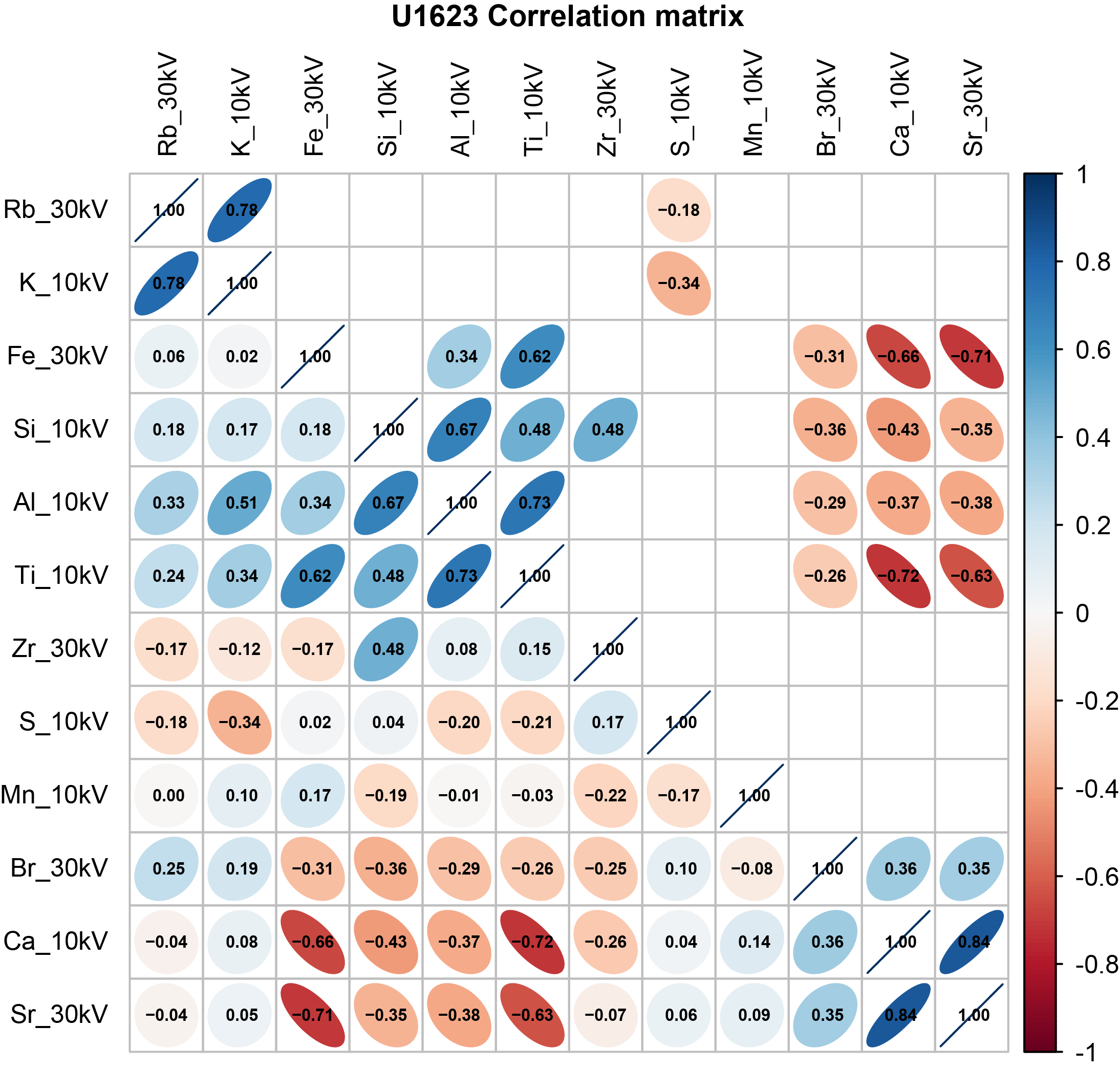
Figure F2. Element correlation matrix.
When element correlations are examined separately for each lithostratigraphic unit and/or subunit, the positive relationships within the terrigenous and pelagic groups as well as the negative relationships between groups are most evident in Unit I. They appear to be partially present in Subunit IIA, and they are substantially less clearly expressed in Subunit IIB (Figure F3). From the base to the top of the Site U1623 sequence, the depositional pattern evolves from a weakly expressed alternation between marine sedimentation and continental input in the older intervals to an increasingly well defined alternation upward, reaching its strongest expression in Unit I (Figure F3). In Subunit IIB, this alternation is least pronounced, with the record instead reflecting a higher depositional or diagenetic variability. Of note, Subunit IIB is characterized by a negative correlation of Fe with both Si and Zr, as well as a lack of statistically significant correlation between Br and either Ca or Sr. The decoupling of Fe from the rock-forming Zr may reflect Fe mobilization and incorporation into authigenic phases (St. John et al., 2026), altering its primary terrigenous signal.
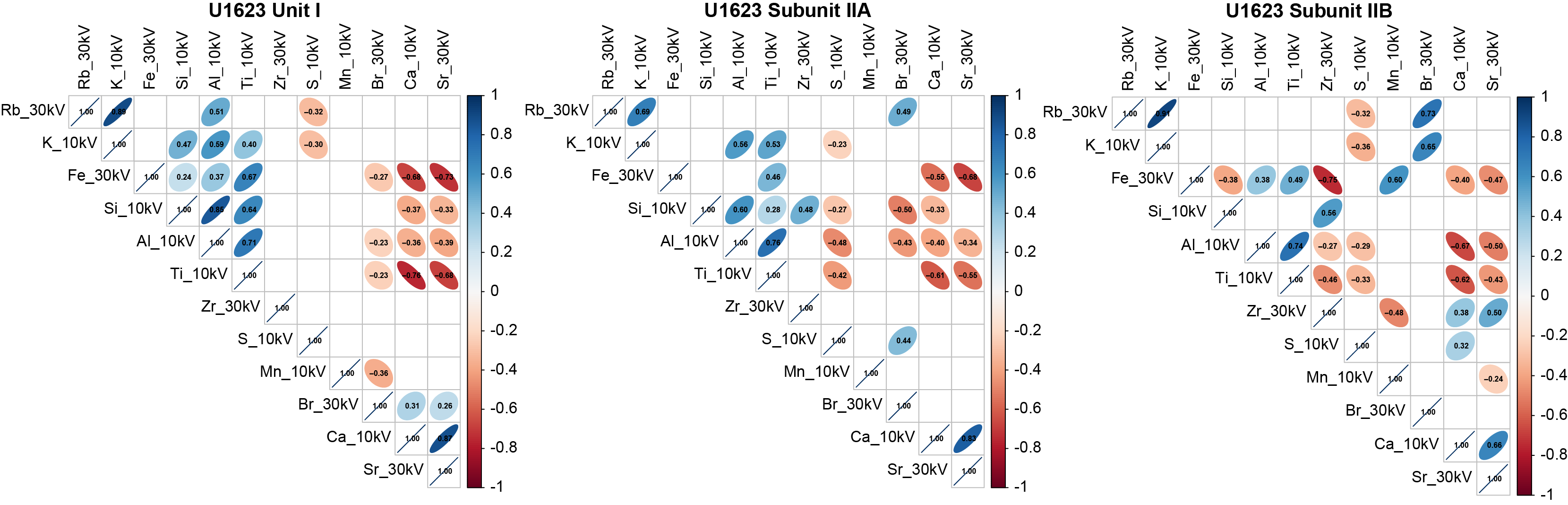
Figure F3. Element correlation matrices, Unit I, Subunit IIA, and Subunit IIB.
3.2. Stratigraphic trends
Select elements Al, Si, Rb, Ca, S, Fe, Zr, and Br were plotted stratigraphically to evaluate compositional trends across the sedimentary succession. These elemental profiles are compared directly with sedimentary unit boundaries defined during shipboard description and with the MS and NGR profiles (St. John et al., 2026; Lucchi et al., 2026a). This integrated approach enables the assessment of how XRF-derived geochemical variability corresponds to lithologic changes observed during core description and physical properties (Figure F4).
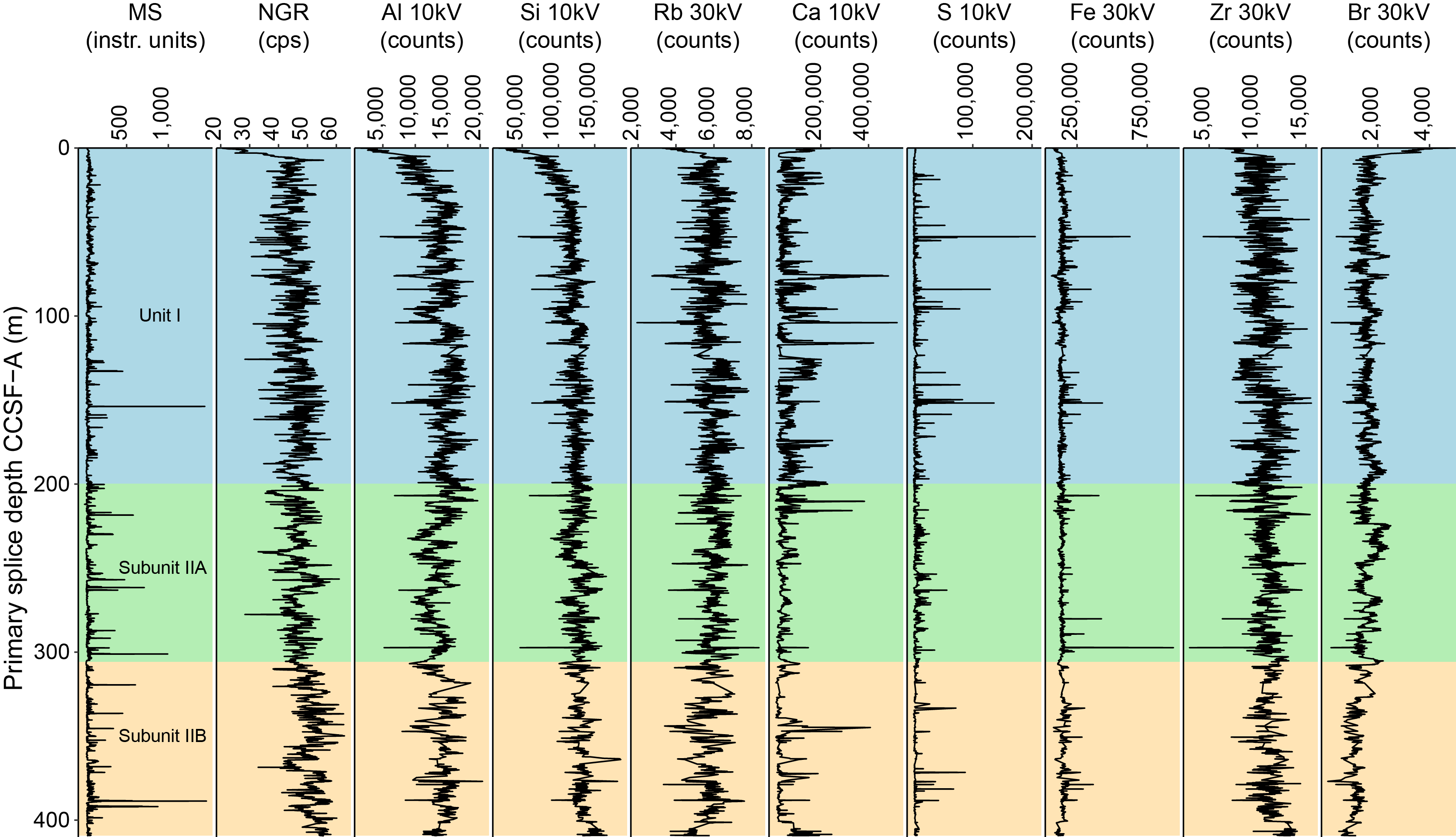
Figure F4. Single element MS, spectral NGR, and low-resolution XRF.
Elemental ratios Al/Ti, Si/Ti, Ca/Ti, Fe/S, Fe/Rb, Br/Rb, and Zr/Rb are also included, omitting values with zeros in the denominator (Figure F5). We applied a ln ratio transformation to the XRF intensities because log-ratios of XRF intensities are linearly related to log-ratios of absolute concentrations downcore (Weltje and Tjallingii, 2008). We acknowledge that this approach has limitations due to the lack of XRF data standardization; however, alternative standardization strategies are better suited for future, application-specific uses of the data. In this report, we therefore provide the data using this basic log-ratio standardization as a consistent baseline for further analysis.
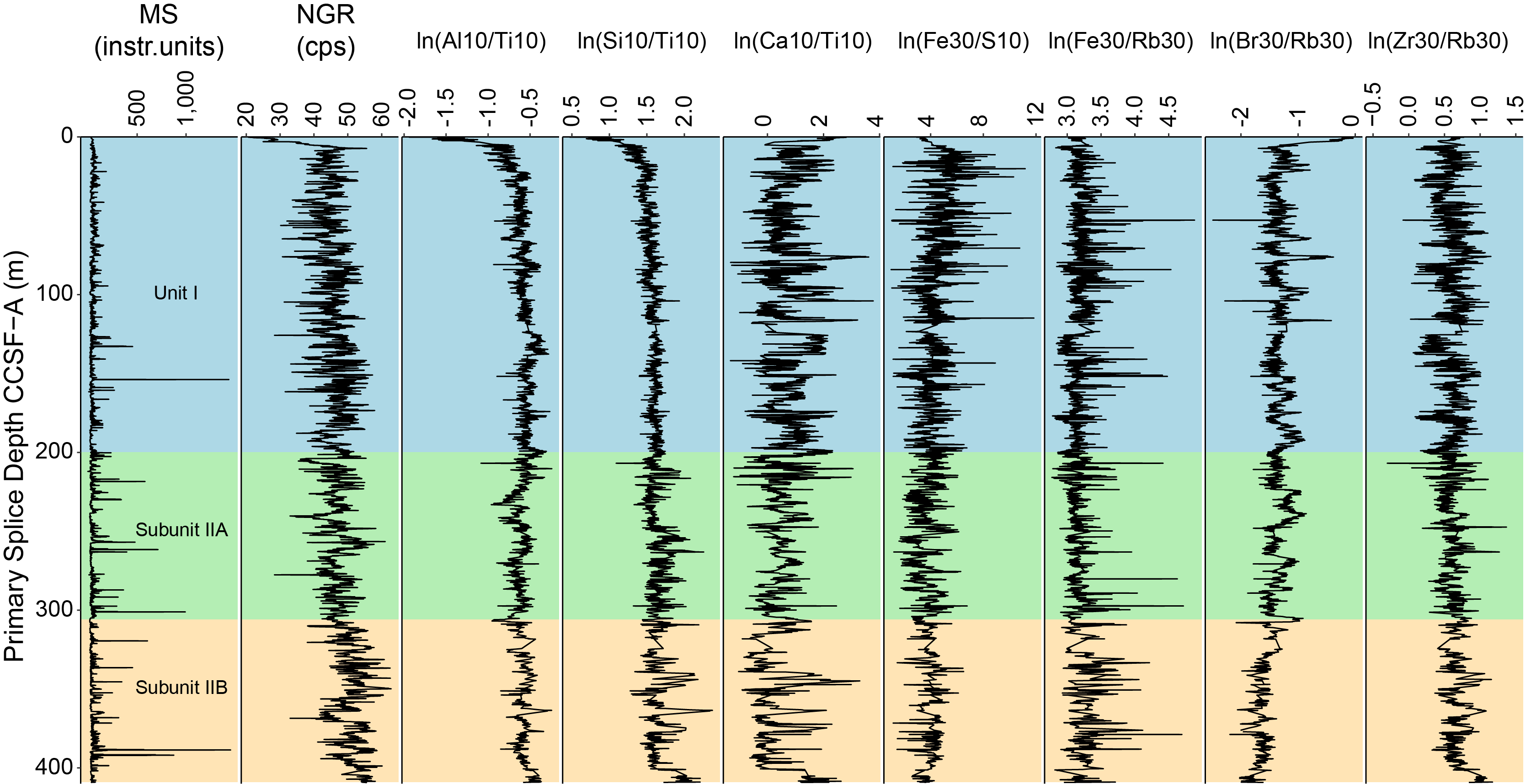
Figure F5. Elemental ratio MS, spectral NGR, and low-resolution XRF.
The ratios presented in this report are selected because they are widely used as proxies in marine sediment studies. The Ca/Ti, Al/Ti, Br/Rb, and Zr/Rb ratios are valuable tools for reconstructing past environmental conditions and understanding sediment characteristics. Specifically, Ca/Ti ratios help in the reconstruction of surface biogenic production changes (Rothwell and Croudace, 2015), and Al/Ti ratios are crucial for interpreting sediment provenance or terrigenous input (Salabarnada et al., 2018). At Sites U1623 and U1621, the use of Ca/Ti and Sr/Ti ratios to reflect changes in biogenic carbonate production is reinforced by the observed covariation between Ca and Sr enrichment relative to Ti and nannofossil abundance increase (i.e., nannofossil abundance events) in sediments. This covariance is indicative of the record of warm conditions at Sites U1623 and U1621 over the last 1 million years (González-Lanchas et al., 2026). Br serves as a proxy for organic matter content and marine biogenic productivity (Ziegler et al., 2008) with Rb used as a normalizer to correct for lithogenic variations in the Br/Rb ratio. The Zr/Rb ratio is used to assess grain-size variability (Ronge and Dbritto, 2024). Together these ratios support applications such as refining lithostratigraphy (Penkrot et al., 2018), analyzing shifts in terrigenous supply, environmentally controlled biogenic production (Hanslik et al., 2013), and the assessment of grain-size variations (Dypvik and Harris, 2001). Below, we provide a detailed description of the most significant variations in these ratios in relation to the stratigraphy.
Lithostratigraphic Unit I is punctuated by peaks in the Fe/S ratio, reflecting an excess of Fe relative to sulfide. This pattern is consistent with increase in Fe input and low S concentrations due to dilution by terrigenous sedimentation. MS is low in this interval, without peaks that often were associated with visible greigite (Fe3S4) layers in Expedition 403 sites (St. John et al., 2026). In contrast, Lithostratigraphic Unit II is marked by a low Fe/S ratio and frequent MS peaks interpreted to be associated with the presence of authigenic minerals, including greigite-rich horizons. The elemental ratios for the uppermost ~38 m CCSF-A of the alternate splice are presented in Figure F6, and high-resolution scans for selected sections of Holes U1623F, U1623G, and U1623A are presented in Figures F7, F8, and F9, respectively.
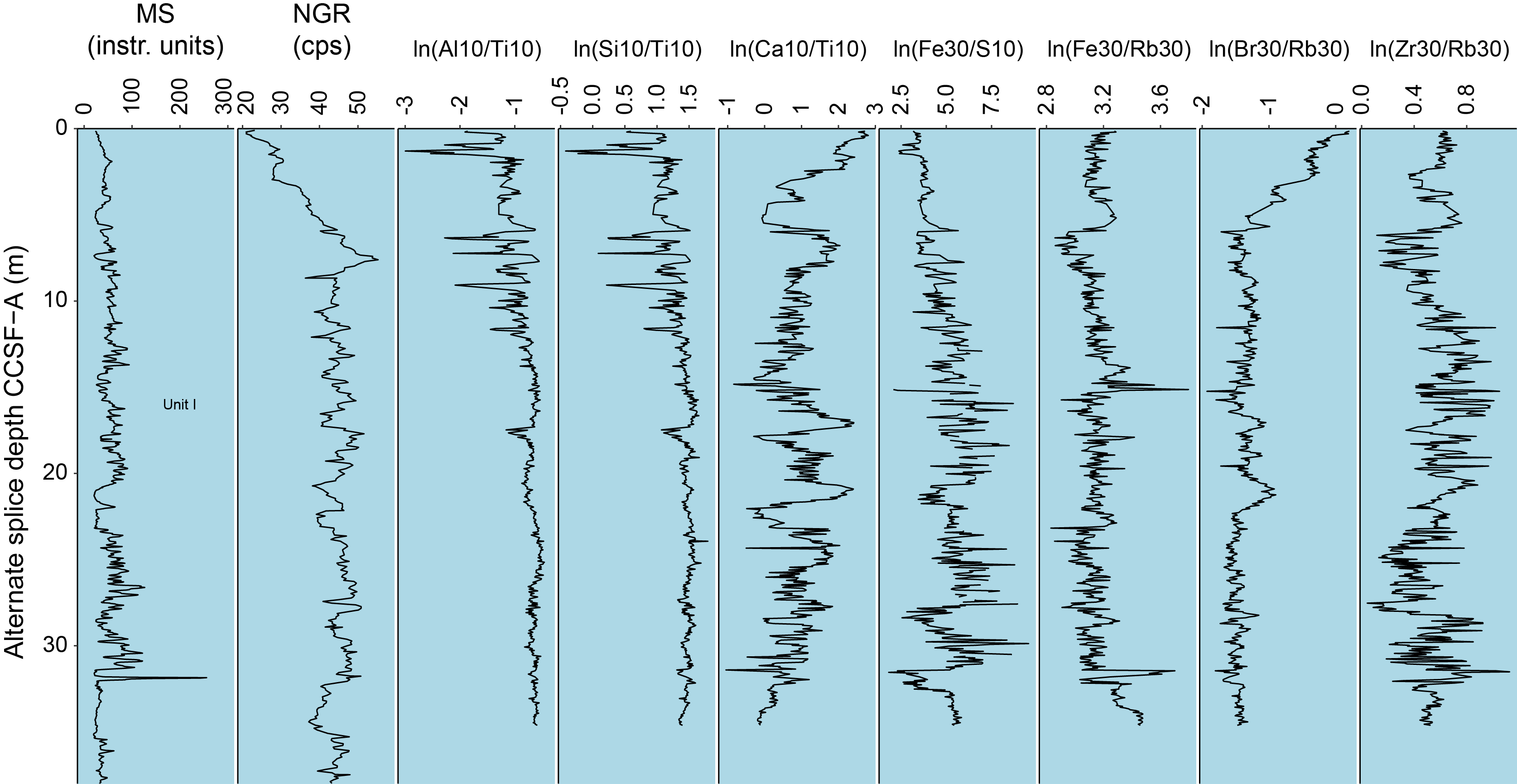
Figure F6. MS, spectral NGR, and low-resolution XRF performed over the alternate splice.
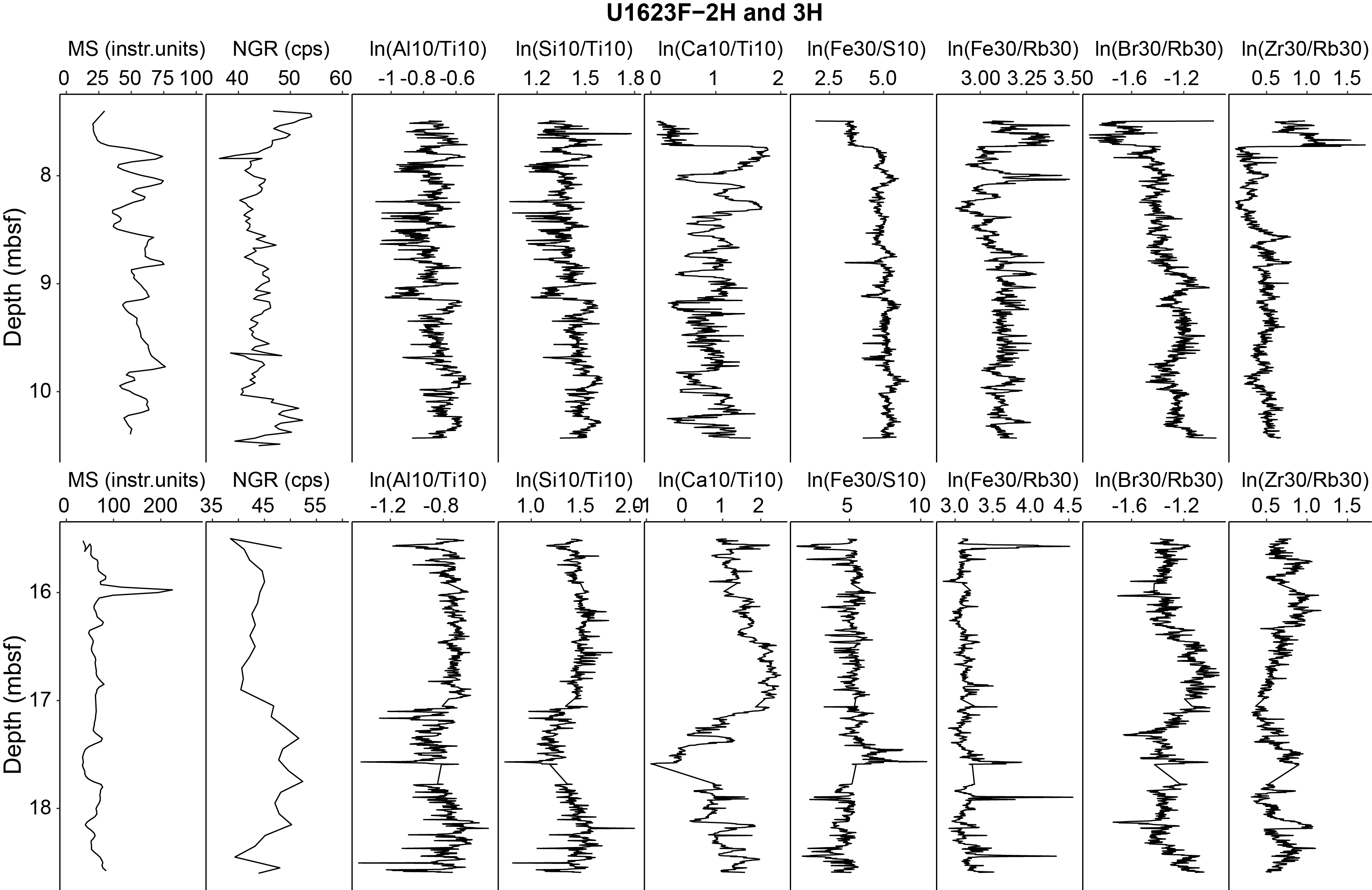
Figure F7. MS, spectral NGR, and high-resolution XRF, Hole U1623F.
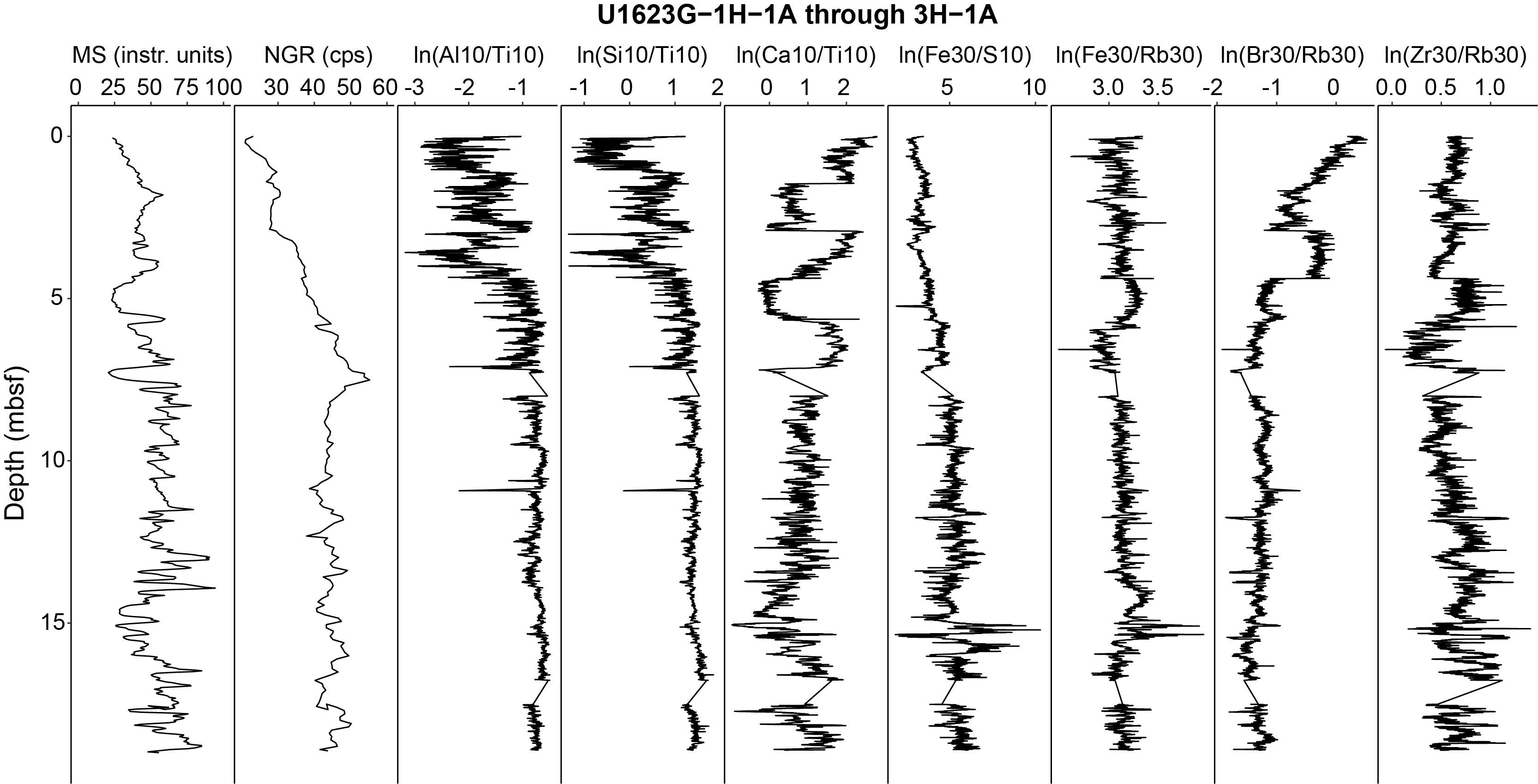
Figure F8. MS, spectral NGR, and high-resolution XRF, Hole U1623G.
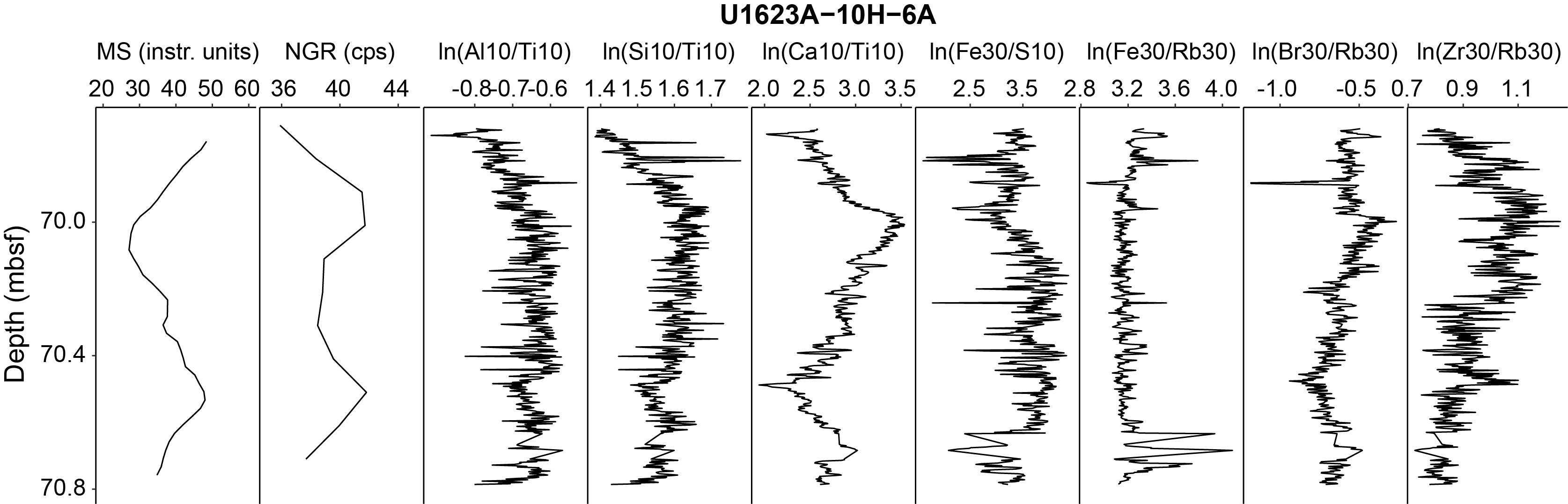
Figure F9. MS, spectral NGR, and high-resolution XRF, Hole U1623A.
In Unit I, Ca counts and the Ca/Ti ratio are characterized by higher values and an increase upsection in both the amplitude and frequency of variability at the low-resolution XRF scans along the primary and the alternate splice (Figures F5, F6). A similar pattern of variability is also evident in Subunit IIB, although only in the lowermost 60 m of the interval (Figure F4). It appears as a clear feature in the Ca profile across the high-resolution scans (Figures F7, F8, F9), in which occasional covariation with the Br profile is observed. On the low-resolution scans across the primary splice, the Br profile exhibits slightly higher amplitude peaks occurring in Subunit IIA (Figure F4). The described trend and structure of variability of Ca across lithostratigraphic units is similarly observed in the Ca/Ti ratio (Figure F5). A comparable but less pronounced trend is observed in the S profile across the lithostratigraphic units (Figure F4). The element profiles of Al, Si, Rb, and Zr display a broadly similar pattern, showing high variability throughout the entire Site U1623 sequence (Figure F4). The Si/Ti ratio is characterized by a higher degree of variability of high amplitude and frequency across Subunits IIA and IIB compared to Unit I (Figure F5).
4. Acknowledgments
We express our gratitude to the crew, staff, and technicians involved in Expedition 403 aboard the R/V JOIDES Resolution, as well as the personnel of the Gulf Coast Repository facility. The XRF data sets presented here are part of the programmatic XRF scanning conducted post expedition during the boreal fall of 2024 at Texas A&M University (USA), funded by NSF in agreement with the US Science Support Program (USSSP). Travel funding for US-based scientists participating in XRF scanning was provided by USSSP. Travel funding for Australian-based scientists participating in XRF scanning was provided by the Australian and New Zealand IODP Consortium (ANZIC). A. Gonzalez-Lanchas acknowledges support from the IODPUK NERC Postdoctoral Postcruise Moratorium Award NE/Z000300/1. The contribution of R.G. Lucchi was funded by MUR through ECORD-IODP Italia. Expedition 403 and the JRSO were funded through NSF award OCE 1326927. All raw data are available for download through the IODP LIMS database (https://iodp.tamu.edu/database). Quality-controlled data included in this report is publicly accessible at the PANGAEA database (Gonzalez-Lanchas, Libman-Roshal et al., 2026a, 2026b, 2026c, 2026d, 2026e, 2026f).
References
Amadori, C., Borrelli, C., Christeson, G., Estes, E., Guertin, L., Hertzberg, J., Kaplan, M.R., Koorapati, R.K., Lam, A.R., Lowery, C.M., McIntyre, A., Reece, J., Robustelli Test, C., Routledge, C.M., Standring, P., Sylvan, J.B., Thompson, M., Villa, A., Wang, Y., Wee, S.Y., Williams, T., Yeon, J., Teagle, D.A.H., Coggon, R.M., and the Expedition 390/393 Scientists, 2024. Data report: X-ray fluorescence scanning of sediment cores, IODP Expedition 390/393 Site U1560, South Atlantic Transect. In Coggon, R.M., Teagle, D.A.H., Sylvan, J.B., Reece, J., Estes, E.R., Williams, T.J., Christeson, G.L., and the Expedition 390/393 Scientists, South Atlantic Transect. Proceedings of the International Ocean Discovery Program, 390/393: College Station, TX (International Ocean Discovery Program). https://doi.org/10.14379/iodp.proc.390393.205.2024
Croudace, I.W., and Rothwell, R.G. (Eds.), 2015. Micro-XRF Studies of Sediment Cores: Applications of a Non-destructive Tool for the Environmental Sciences: Dordrecht, Netherlands (Springer). https://doi.org/10.1007/978-94-017-9849-5
Dypvik, H., and Harris, N.B., 2001. Geochemical facies analysis of fine-grained siliciclastics using Th/U, Zr/Rb and (Zr+Rb)/Sr ratios. Chemical Geology, 181(1–4):131–146. https://doi.org/10.1016/S0009-2541(01)00278-9
Gonzalez-Lanchas, A., Libman-Roshal, O., Duxbury, L., Gebhardt, A.C., Kapuge, A.K.I.U., Monito, L., Goss, G., Reilly, B.T., Haygood, L., Yeon, J., St. John, K.E.K., Lucchi, R.G., Ronge, T.A., Lam, A.R., Redman, B., St. John, L., Bárcena, M. A., De Schepper, S., Greco, N., Gruetzner, J., Husum, K., Iizuka, M., Liu, Y., Rosenthal, Y., Sakai, Y., Suganuma, Y., Sijinkumar, A.V., and Zhong, Y., 2026a. Quality-controlled XRF data for low resolution (primary) scans from IODP Site 403-U1623 [dataset]. PANGAEA. https://doi.org/10.1594/PANGAEA.991451
Gonzalez-Lanchas, A., Libman-Roshal, O., Duxbury, L., Gebhardt, A.C., Kapuge, A.K.I.U., Monito, L., Goss, G., Reilly, B.T., Haygood, L., Yeon, J., St. John, K.E.K., Lucchi, R.G., Ronge, T.A., Lam, A.R., Redman, B., St. John, L., Bárcena, M. A., De Schepper, S., Greco, N., Gruetzner, J., Husum, K., Iizuka, M., Liu, Y., Rosenthal, Y., Sakai, Y., Suganuma, Y., Sijinkumar, A.V., and Zhong, Y., 2026b. Quality-controlled XRF data for low resolution (alternate) scans from IODP Site 403-U1623 [dataset]. PANGAEA. https://doi.org/10.1594/PANGAEA.991449
Gonzalez-Lanchas, A., Libman-Roshal, O., Duxbury, L., Gebhardt, A.C., Kapuge, A.K.I.U., Monito, L., Goss, G., Reilly, B.T., Haygood, L., Yeon, J., St. John, K.E.K., Lucchi, R.G., Ronge, T.A., Lam, A.R., Redman, B., St. John, L., Bárcena, M. A., De Schepper, S., Greco, N., Gruetzner, J., Husum, K., Iizuka, M., Liu, Y., Rosenthal, Y., Sakai, Y., Suganuma, Y., Sijinkumar, A.V., and Zhong, Y., 2026c. Quality-controlled XRF data for high resolution scans from IODP Site 403-U1623 [dataset]. PANGAEA. https://doi.org/10.1594/PANGAEA.991448
Gonzalez-Lanchas, A., Libman-Roshal, O., Duxbury, L., Gebhardt, A.C., Kapuge, A.K.I.U., Monito, L., Goss, G., Reilly, B.T., Haygood, L., Yeon, J., St. John, K.E.K., Lucchi, R.G., Ronge, T.A., Lam, A.R., Redman, B., St. John, L., Bárcena, M. A., De Schepper, S., Greco, N., Gruetzner, J., Husum, K., Iizuka, M., Liu, Y., Rosenthal, Y., Sakai, Y., Suganuma, Y., Sijinkumar, A.V., and Zhong, Y., 2026d. Spearman ρ-values and p-values calculated using R for IODP Site 403-U1623 [dataset]. PANGAEA. https://doi.org/10.1594/PANGAEA.991445
Gonzalez-Lanchas, A., Libman-Roshal, O., Duxbury, L., Gebhardt, A.C., Kapuge, A.K.I.U., Monito, L., Goss, G., Reilly, B.T., Haygood, L., Yeon, J., St. John, K.E.K., Lucchi, R.G., Ronge, T.A., Lam, A.R., Redman, B., St. John, L., Bárcena, M. A., De Schepper, S., Greco, N., Gruetzner, J., Husum, K., Iizuka, M., Liu, Y., Rosenthal, Y., Sakai, Y., Suganuma, Y., Sijinkumar, A.V., and Zhong, Y., 2026e. Quality-controlled XRF data for low resolution scans from IODP Site 403-U1621 [dataset]. PANGAEA. https://doi.org/10.1594/PANGAEA.991447
Gonzalez-Lanchas, A., Libman-Roshal, O., Duxbury, L., Gebhardt, A.C., Kapuge, A.K.I.U., Monito, L., Goss, G., Reilly, B.T., Haygood, L., Yeon, J., St. John, K.E.K., Lucchi, R.G., Ronge, T.A., Lam, A.R., Redman, B., St. John, L., Bárcena, M. A., De Schepper, S., Greco, N., Gruetzner, J., Husum, K., Iizuka, M., Liu, Y., Rosenthal, Y., Sakai, Y., Suganuma, Y., Sijinkumar, A.V., and Zhong, Y., 2026f. Quality-controlled XRF data for high resolution scans from IODP Site 403-U1621 [dataset]. PANGAEA. https://doi.org/10.1594/PANGAEA.991446
González-Lanchas, A., Reilly, B.T., Bárcena, M.A., De Schepper, S., Gebhardt, A.C., Gruetzner, J., Husum, K., Rosenthal, Y., Suganuma, Y., Zhong, Y., Rickaby, R.E.M., Kapuge, A.K.I.U., Monito, L.R., Yeon, J., Lucchi, R.G., St. John, K., Ronge, T.A., Duxbury, L., Goss, G., Greco, N., Haygood, L., Iizuka, M., Lam, A.R., Libman-Roshal, O., Liu, Y., Sakai, Y., and Sijinkumar, A.V., 2026. A paleoclimate reference record spanning the last 1 million years from the Fram Strait (Sites U1621 and U1623, IODP Expedition 403). Quaternary Science Reviews, 377:109838. https://doi.org/10.1016/j.quascirev.2026.109838
Hanslik, D., Löwemark, L., and Jakobsson, M., 2013. Biogenic and detrital-rich intervals in central Arctic Ocean cores identified using x-ray fluorescence scanning. Polar Research, 32:18386. https://doi.org/10.3402/polar.v32i0.18386
Hodell, D.A., Channell, J.E.T., Curtis, J.H., Romero, O.E., and Röhl, U., 2008. Onset of "Hudson Strait" Heinrich events in the eastern North Atlantic at the end of the middle Pleistocene transition (~640 ka)? Paleoceanography and Paleoclimatology, 23(4):PA4218. https://doi.org/10.1029/2008PA001591
Lam, A.R., Amadori, C., Borrelli, C., Christeson, G., Estes, E., Guertin, L., Hertzberg, J., Kaplan, M.R., Koorapati, R.K., Lowery, C.M., McIntyre, A., Reece, J.S., Robustelli Test, C., Routledge, C.M., Standring, P., Sylvan, J.B., Thompson, M., Villa, A., Wang, Y., Wee, S.Y., Williams, T., Yeon, J., Teagle, D.A.H., Coggon, R.M., and the Expedition 390/393 Scientists, 2024. Data report: X-ray fluorescence scanning of sediment cores, IODP Expedition 390/393 Site U1583, South Atlantic Transect. In Coggon, R.M., Teagle, D.A.H., Sylvan, J.B., Reece, J., Estes, E.R., Williams, T.J., Christeson, G.L., and the Expedition 390/393 Scientists, South Atlantic Transect. Proceedings of the International Ocean Discovery Program, 390/393: College Station, TX (International Ocean Discovery Program). https://doi.org/10.14379/iodp.proc.390393.202.2024
Libman-Roshal, O., Duxbury, L.C., Gebhardt, A.C., Gonzalez-Lanchas, A., Kapuge, A.K.I.U., Monito, L.R., Haygood, L., Goss, G., Yeon, J., Reilly, B.T., St. John, K.E.K., Lucchi, R.G., Ronge, T.A., Lam, A.R., Redman, B., St. John, L., Bárcena, M.A., De Schepper, S., Greco, N.M., Gruetzner, J., Husum, K., Iizuka, M., Liu, Y., Rosenthal, Y., Sakai. Y., Suganuma, Y., Sijinkumar, A.V., and Zhong, Y., 2026. Data report: X-ray fluorescence scanning of sediment cores from Site U1618, IODP Expedition 403, Eastern Fram Strait Paleo-Archive. In Lucchi, R.G., St. John, K.E.K., Ronge, T.A., and the Expedition 403 Scientists, Eastern Fram Strait Paleo-Archive. Proceedings of the International Ocean Discovery Program, 403: College Station, TX (International Ocean Discovery Program). https://doi.org/10.14379/iodp.proc.403.202.2026
Lowery, C.M., Amadori, C., Borrelli, C., Christeson, G., Estes, E., Guertin, L., Hertzberg, J., Kaplan, M.R., Koorapati, R.K., Lam, A.R., McIntyre, A., Reece, J., Robustelli Test, C., Routledge, C.M., Standring, P., Sylvan, J.B., Thompson, M., Villa, A., Wang, Y., Wee, S.Y., Williams, T., Yeon, J., Teagle, D.A.H., Coggon, R.M., and the Expedition 390/393 Scientists, 2024. Data report: X-ray fluorescence scanning of sediment cores, IODP Expedition 390/393 Site U1557, South Atlantic Transect. In Coggon, R.M., Teagle, D.A.H., Sylvan, J.B., Reece, J., Estes, E.R., Williams, T.J., Christeson, G.L., and the Expedition 390/393 Scientists, South Atlantic Transect. Proceedings of the International Ocean Discovery Program, 390/393: College Station, TX (International Ocean Discovery Program). https://doi.org/10.14379/iodp.proc.390393.201.2024
Lucchi, R.G., St. John, K.E.K., Ronge, T.A., Barcena, M.A., De Schepper, S., Duxbury, L.C., Gebhardt, A.C., Gonzalez-Lanchas, A., Goss, G., Greco, N.M., Gruetzner, J., Haygood, L., Husum, K., Iizuka, M., Kapuge, A.K.I.U., Lam, A.R., Libman-Roshal, O., Liu, Y., Monito, L.R., Reilly, B.T., Rosenthal, Y., Sakai, Y., Sijinkumar, A.V., Suganuma, Y., and Zhong, Y., 2026a. Expedition 403 methods. In Lucchi, R.G., St. John, K.E.K., Ronge, T.A., and the Expedition 403 Scientists, Eastern Fram Strait Paleo-Archive. Proceedings of the International Ocean Discovery Program, 403: College Station, TX (International Ocean Discovery Program). https://doi.org/10.14379/iodp.proc.403.102.2026
Lucchi, R.G., St. John, K.E.K., Ronge, T.A., Barcena, M.A., De Schepper, S., Duxbury, L.C., Gebhardt, A.C., González-Lanchas, A., Goss, G., Greco, N.M., Gronmyr, V., Gruetzner, J., Haygood, L., Husum, K., Iizuka, M., Kapuge, A.K.I.U., Lam, A.R., Libman-Roshal, O., Liu, Y., Monito, L.R., Reilly, B.T., Rosenthal, Y., Ruzycki, P., Sakai, Y., Sijinkumar, A.V., Suganuma, Y., and Zhong, Y., 2026b. IODP Expedition 403 X-ray fluorescence (XRF) [dataset]. International Ocean Discovery Program. https://doi.org/10.5281/zenodo.18437119
Mahajan, S., Zhang, R., and Delworth, T.L., 2011. Impact of the Atlantic Meridional Overturning Circulation (AMOC) on Arctic surface air temperature and sea ice variability. Journal of Climate, 24(24):6573–6581. https://doi.org/10.1175/2011JCLI4002.1
Overland, J.E., Wood, K.R., and Wang, M., 2011. Warm Arctic - cold continents: climate impacts of the newly open Arctic Sea. Polar Research, 30(15787). https://doi.org/10.3402/polar.v30i0.15787
Penkrot, M.L., Jaeger, J.M., Cowan, E.A., St-Onge, G., and LeVay, L., 2018. Multivariate modeling of glacimarine lithostratigraphy combining scanning XRF, multisensory core properties, and CT imagery: IODP Site U1419. Geosphere, 14(4):1935–1960. https://doi.org/10.1130/GES01635.1
Rantanen, M., Karpechko, A.Y., Lipponen, A., Nordling, K., Hyvärinen, O., Ruosteenoja, K., Vihma, T., and Laaksonen, A., 2022. The Arctic has warmed nearly four times faster than the globe since 1979. Communications Earth & Environment, 3(1):168. https://doi.org/10.1038/s43247-022-00498-3
Rebesco, M., Wåhlin, A., Laberg, J.S., Schauer, U., Beszczynska-Möller, A., Lucchi, R.G., Noormets, R., Accettella, D., Zarayskaya, Y., and Diviacco, P., 2013. Quaternary contourite drifts of the Western Spitsbergen margin. Deep Sea Research, Part I: Oceanographic Research Papers, 79:156–168. https://doi.org/10.1016/j.dsr.2013.05.013
Robustelli Test, C., Amadori, C., Borrelli, C., Christeson, G., Estes, E., Guertin, L., Hertzberg, J., Kaplan, M.R., Koorapati, R.K., Lam, A.R., Lowery, C.M., McIntyre, A., Reece, J., Routledge, C.M., Standring, P., Sylvan, J.B., Thompson, M., Villa, A., Wang, Y., Wee, S.Y., Williams, T., Yeon, J., Teagle, D.A.H., Coggon, R.M., and the Expedition 390/393 Scientists, 2024. Data report: X-ray fluorescence scanning of sediment cores, IODP Expedition 390/393 Site U1559, South Atlantic Transect. In Coggon, R.M., Teagle, D.A.H., Sylvan, J.B., Reece, J., Estes, E.R., Williams, T.J., Christeson, G.L., and the Expedition 390/393 Scientists, South Atlantic Transect. Proceedings of the International Ocean Discovery Program, 390/393: College Station, TX (International Ocean Discovery Program). https://doi.org/10.14379/iodp.proc.390393.204.2024
Ronge, T.A., and Dbritto, S., 2024. Data report: using XRF scanning–derived grain size analysis for rapid assessment of bottom current velocities on long drill cores from the southern Scotia Sea, IODP Expedition 382. In Weber, M.E., Raymo, M.E., Peck, V.L., Williams, T., and the Expedition 382 Scientists, Iceberg Alley and Subantarctic Ice and Ocean Dynamics. Proceedings of the International Ocean Discovery Program, 382: College Station, TX (International Ocean Discovery Program). https://doi.org/10.14379/iodp.proc.382.201.2024
Rothwell, R.G., and Croudace, I.W., 2015. Twenty years of XRF core scanning marine sediments: what do geochemical proxies tell us? In Croudace, I.W., and Rothwell, R.G. (Eds.), Micro-XRF Studies of Sediment Cores: Applications of a non-destructive tool for the environmental sciences. Dordrecht (Springer Netherlands), 25–102. https://doi.org/10.1007/978-94-017-9849-5_2
Routledge, C.M., Amadori, C., Borrelli, C., Christeson, G., Estes, E., Guertin, L., Hertzberg, J., Kaplan, M.R., Koorapati, R.K., Lam, A.R., Lowery, C.M., McIntyre, A., Reece, J., Robustelli Test, C., Standring, P., Sylvan, J.B., Thompson, M., Villa, A., Wang, Y., Wee, S.Y., Williams, T., Yeon, J., Teagle, D.A.H., Coggon, R.M., and the Expedition 390/393 Scientists, 2024. Data report: X-ray fluorescence scanning of sediment cores, IODP Expedition 390/393 Site U1561, South Atlantic Transect. In Coggon, R.M., Teagle, D.A.H., Sylvan, J.B., Reece, J., Estes, E.R., Williams, T.J., Christeson, G.L., and the Expedition 390/393 Scientists, South Atlantic Transect. Proceedings of the International Ocean Discovery Program, 390/393: College Station, TX (International Ocean Discovery Program). https://doi.org/10.14379/iodp.proc.390393.207.2024
Salabarnada, A., Escutia, C., Röhl, U., Nelson, C.H., McKay, R., Jiménez-Espejo, F.J., Bijl, P.K., Hartman, J.D., Strother, S.L., Salzmann, U., Evangelinos, D., López-Quirós, A., Flores, J.A., Sangiorgi, F., Ikehara, M., and Brinkhuis, H., 2018. Paleoceanography and ice sheet variability offshore Wilkes Land, Antarctica: Part 1. Insights from late Oligocene astronomically paced contourite sedimentation. Climate of the Past, 14(7):991–1014. https://doi.org/10.5194/cp-14-991-2018
St. John, K.E.K., Lucchi, R.G., Ronge, T.A., Barcena, M.A., De Schepper, S., Duxbury, L.C., Gebhardt, A.C., Gonzalez-Lanchas, A., Goss, G., Greco, N.M., Gruetzner, J., Haygood, L., Husum, K., Iizuka, M., Kapuge, A.K.I.U., Lam, A.R., Libman-Roshal, O., Liu, Y., Monito, L.R., Reilly, B.T., Rosenthal, Y., Sakai, Y., Sijinkumar, A.V., Suganuma, Y., and Zhong, Y., 2026. Expedition 403 summary. In Lucchi, R.G., St. John, K.E.K., Ronge, T.A., and the Expedition 403 Scientists, Eastern Fram Strait Paleo-Archive. Proceedings of the International Ocean Discovery Program, 403: College Station, TX (International Ocean Discovery Program). https://doi.org/10.14379/iodp.proc.403.101.2026
Taylor, S.P., Patterson, M.O., Lam, A.R., Jones, H., Woodard, S.C., Habicht, M.H., Thomas, E.K., and Grant, G.R., 2022. Expanded North Pacific subtropical gyre and heterodyne expression during the Mid-Pleistocene. Paleoceanography and Paleoclimatology, 37(5):e2021PA004395. https://doi.org/10.1029/2021PA004395
Vasiliev, M.A., Blum, P., Chubarian, G., Olsen, R., Bennight, C., Cobine, T., Fackler, D., Hastedt, M., Houpt, D., Mateo, Z., and Vasilieva, Y.B., 2011. A new natural gamma radiation measurement system for marine sediment and rock analysis. Journal of Applied Geophysics, 75(3):455–463. https://doi.org/10.1016/j.jappgeo.2011.08.008
Villa, A., Amadori, C., Borrelli, C., Christeson, G., Estes, E., Guertin, L., Hertzberg, J., Kaplan, M.R., Koorapati, R.K., Lam, A.R., Lowery, C.M., McIntyre, A., Reece, J., Robustelli Test, C., Routledge, C.M., Standring, P., Sylvan, J.B., Thompson, M., Wang, Y., Wee, S.Y., Williams, T., Yeon, J., Teagle, D.A.H., Coggon, R.M., and the Expedition 390/393 Scientists, 2024. Data report: X-ray fluorescence scanning of sediment cores, IODP Expedition 390/393 Site U1558, South Atlantic Transect. In Coggon, R.M., Teagle, D.A.H., Sylvan, J.B., Reece, J., Estes, E.R., Williams, T.J., Christeson, G.L., and the Expedition 390/393 Scientists, South Atlantic Transect. Proceedings of the International Ocean Discovery Program, 390/393: College Station, TX (International Ocean Discovery Program). https://doi.org/10.14379/iodp.proc.390393.203.2024
Walczowski, W., and Piechura, J., 2011. Influence of the West Spitsbergen Current on the local climate. International Journal of Climatology, 31(7):1088–1093. https://doi.org/10.1002/joc.2338
Wang, Y., Amadori, C., Borrelli, C., Christeson, G., Estes, E., Guertin, L., Hertzberg, J., Kaplan, M.R., Koorapati, R.K., Lam, A.R., Lowery, C.M., McIntyre, A., Reece, J., Robustelli Test, C., Routledge, C.M., Standring, P., Sylvan, J.B., Thompson, M., Villa, A., Wee, S.Y., Williams, T., Yeon, J., and the Expedition 390/393 Scientists, 2024. Data report: X-ray fluorescence scanning of sediment cores, IODP Expedition 390/393 Site U1556, South Atlantic Transect. In Coggon, R.M., Teagle, D.A.H., Sylvan, J.B., Reece, J., Estes, E.R., Williams, T.J., Christeson, G.L., and the Expedition 390/393 Scientists, South Atlantic Transect. Proceedings of the International Ocean Discovery Program, 390/393: College Station, TX (International Ocean Discovery Program). https://doi.org/10.14379/iodp.proc.390393.206.2024
Weltje, G.J., and Tjallingii, R., 2008. Calibration of XRF core scanners for quantitative geochemical logging of sediment cores: theory and application. Earth and Planetary Science Letters, 274(3–4):423–438. https://doi.org/10.1016/j.epsl.2008.07.054
Ziegler, M., Jilbert, T., de Lange, G.J., Lourens, L.J., and Reichart, G.-J., 2008. Bromine counts from XRF scanning as an estimate of the marine organic carbon content of sediment cores. Geochemistry, Geophysics, Geosystems, 9(5):Q05009. https://doi.org/10.1029/2007GC001932